Skip to content
Advertising & Digital Marketing Agency in Tokyo – Humble Bunny
  • ServicesExpand
    • LocaRISE® Conversion Stack
    • Advertising (PPC & SEM)
    • Search Engine Optimization (SEO)
    • Marketplace Sales Optimization
    • Localization & Conversion Optimization
    • All Services
  • Case studies
  • Articles
  • Work at HB
  • About
  • Contact
  • 日本語
Advertising & Digital Marketing Agency in Tokyo – Humble Bunny

Japan’s Top Social Media Platforms for 2026 – 11th Edition

10 Feb
2026
Localization & Branding, Social Media

Last Updated: February 10, 2026

As the frontrunner, Japan’s top social media network is LINE, with over 99 million users and more than 80% of the population using the app every day — making it one of the most dominant digital platforms in the country.

From Instagram’s visual storytelling to TikTok’s growing influence on younger generations, Japan’s social media landscape in 2026 is more dynamic and competitive than ever.

As we celebrate 16 years of helping brands succeed in Japan’s digital ecosystem, we’re proud to present the 11th edition of our go-to guide to Japan’s most popular social media platforms.

Whether you’re entering the Japanese market for the first time or refining your digital strategy, this guide provides an in-depth breakdown of the leading social media platforms in Japan in 2026, complete with updated user data, platform trends, and actionable marketing insights to help you succeed.

Table of Contents

  • Methodology and Sources
  • Key Points You Should Know About Japan’s Social Media Trends
  • Japan’s Digital Landscape in 2026
  • Monthly Active Users by Platform
  • Key Behavioural Trends in Japan for 2026
  • LINE Japan
  • YouTube Japan
  • X (Twitter) Japan
  • Instagram Japan
  • Facebook Japan
  • TikTok Japan
  • Japanese Social Media Trends for 2026
  • Get a Localized Social Media Strategy for Your Business With Humble Bunny
  • Japanese SNS FAQs

Key Points You Should Know About Japan’s Social Media Trends

Here are some high-level trends to take note of. We will dive deeper into these points in this article:

  • Rise of Niche Digital Creators: Thriving on tailored content, digital creators in Japan build engaged communities through relatable experiences and niche interests.
  • Primary Source for News: Amidst distrust of traditional sources, Japanese SNS platforms are pivotal for immediate news and insights.
  • Voice of Criticism and Concern: Social media serves as a platform for Japanese users to voice political opinions and societal concerns.
  • Customer Service Evolution: Brands utilize platforms like LINE for efficient, real-time customer service interactions.
  • Focus on Localization: Businesses embrace localization strategies, enhancing engagement and brand affinity among Japanese audiences. Brands that adapt tone, visuals, timing, and customer support to Japanese expectations, including local holidays and cultural context consistently outperform global templates.
  • Influencer Impact: Influencers shape cultural norms and trends, having significant influence in Japanese society.
  • Targeting Older Demographics: Increasing campaigns cater to Japan’s aging population, tapping into high disposable incomes and platform preferences.
  • Content that Resonates with Audiences: Tailoring content to align with Japan’s digital trends enhances engagement and fosters stronger connections with local audiences.
  • Multi-platform strategies are essential in Japan: Users behave very differently across LINE, X, Instagram, TikTok, and YouTube, and one-size-fits-all campaigns consistently underperform. In our work with DailyFX, performance improved when each platform played a distinct role in the customer journey from casual conversation on LINE to trend discovery on TikTok and deeper research on YouTube.
  • Trust and authenticity drive results: Japanese consumers are cautious and highly informed, so polished ads alone rarely convert. Niche creators, behind-the-scenes content, and genuinely useful information build stronger engagement and long-term loyalty.

Want to learn more about ways to obtain conversions from your social media platforms?

Book a Discovery Call with Humble Bunny’s Social Media Strategists

Japan’s Digital Landscape in 2026

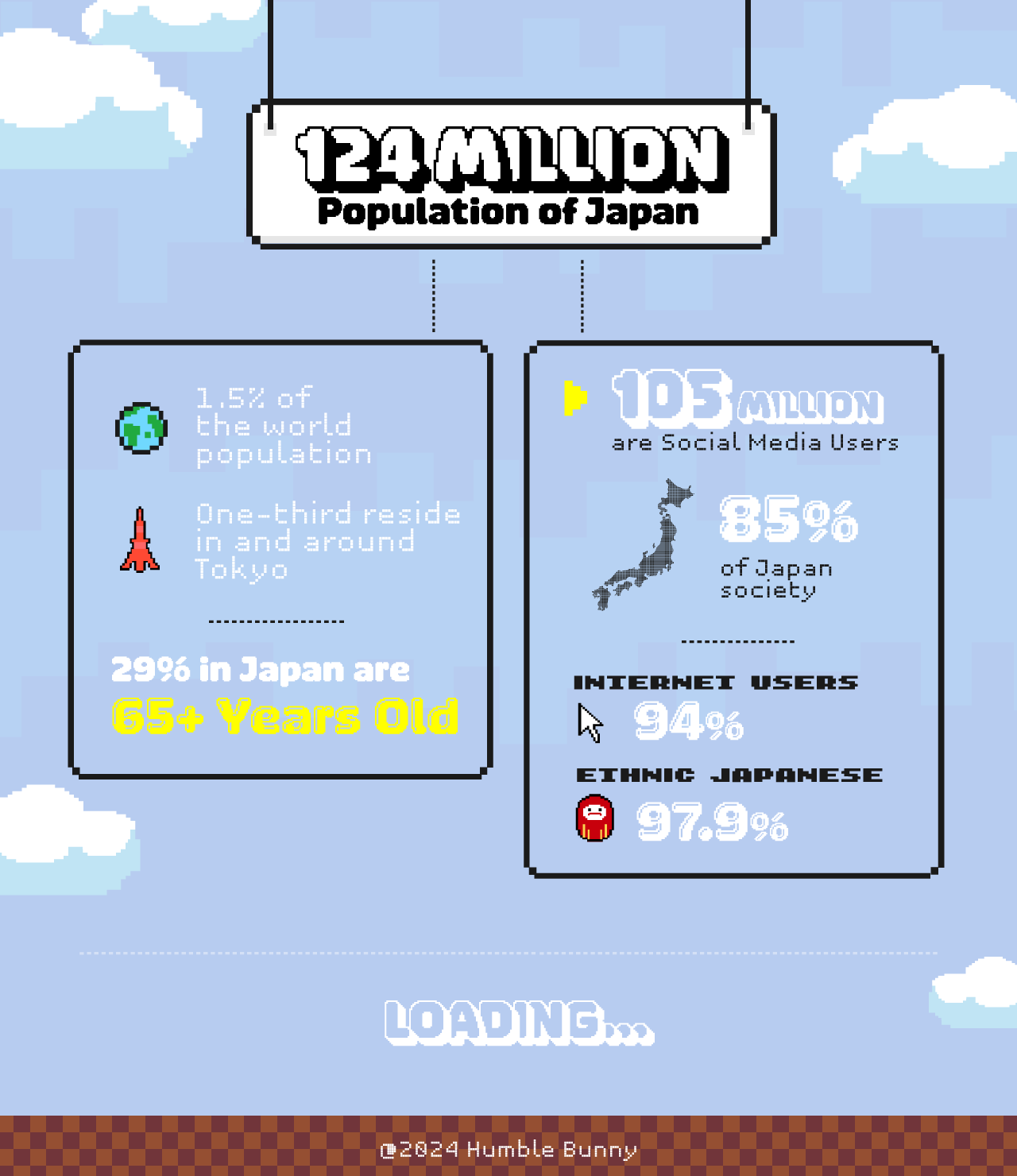
pixel art infographic summarizing population of Japan in relation to the population of the world, residents who reside in Tokyo, 65+ years old demographic, social media users, internet users, and ethnic Japanese population.

Japan’s Most Popular Social Media Platforms Overview (2026)

  • LINE remains the #1 social media platform in Japan with 97M+ users and over 80% of the population using it daily.
  • YouTube is a major player — widely used for video content and consistently ranks near the top in monthly active users, with over 70M+ users across age groups.
  • High overall SNS penetration — Over 8 out of 10 Japanese internet users use at least one social media platform on a regular basis.
  • Other leading platforms include X (Twitter), Instagram, and TikTok, which have tens of millions of active users and strong niche engagement depending on demographic.Video watching and messaging ****are among the most common activities.
  • Users often maintain accounts on multiple platforms (rather than favoring just one).

Internet penetration in Japan has reached new heights, with 99 million active social media user identities. For perspective, this figure was equivalent to 80% of Japan’s total population. Analysis shows that social media user identities in Japan increased by 2.0 million (+2.1% between late 2024 and the end of 2025.

But unlike other countries, Japan’s social media preferences reveal unique behavioral patterns—favoring privacy, niche communities, and platforms that integrate daily utilities like payment services and news updates.

In Japan, people are generally more reserved about sharing strong personal opinions in public. As a result, platforms that allow anonymity or avatar-based identities tend to be especially appealing.

The nation is also famous for rejecting global trends and carving its own path—instead playing a trend-setting role in the regional context with its own set of distinctly Japanese styles, technologies, and platforms, such as LINE.

Reasons for this are many, but include the nation’s uniquely monocultural society at 97% ethnic Japanese, contributing to a highly attuned sense of national identity and a collectivist way of interpreting cultural trends.

Find out what this means for your Japan strategy

Discover 10 Essential Insights About Japanese Consumers

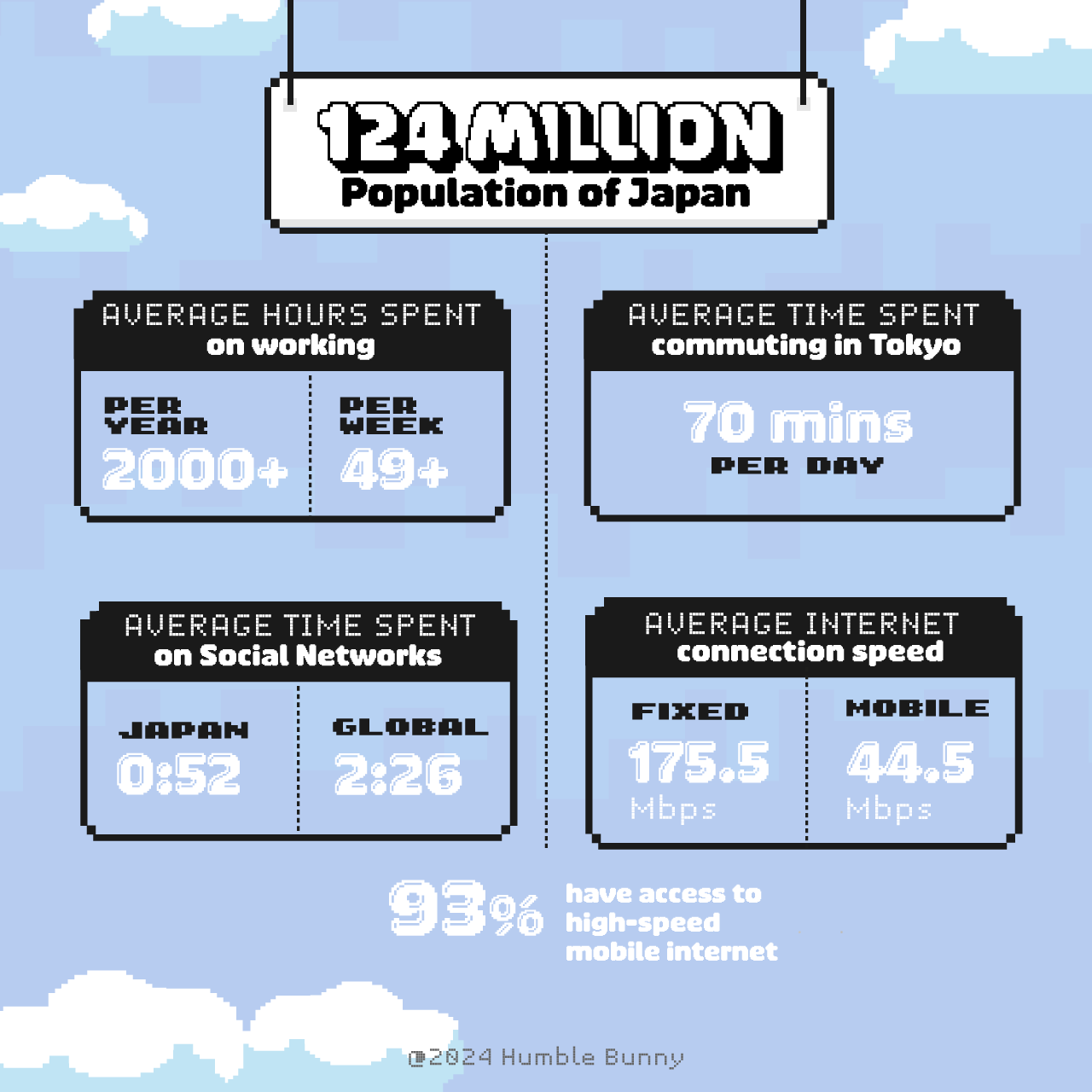
data infographic highlighting population of Japan, average hours spent on working, average time spent commuting in Tokyo, average time spent on social networks, average internet connection speed, and percentage that have access to high-speed mobile internet

In addition to spending over 2184 hours working, individuals in Japan’s major urban hubs such as the greater Tokyo metropolitan area (where one third of the population resides) spend 46+ minutes commuting to and from work or school. And the majority of this is done using trains and buses on the nation’s efficient public transport network.

As such, social media serves as a vital lifeline, allowing these long journeys to be used for catching up on news, connecting with friends and family, keeping abreast of societal trends, and engaging with online communities.

Monthly Active Users by Platform

*Tap or Hover on the graph below to see details.

Shifts in the way user data is reported by certain advertising platforms have made direct comparisons with last year’s rankings less straightforward.

Nonetheless, the overall trends indicate that platform preferences in Japan have remained relatively consistent with 2026.

LINE firmly holds its position as the leading communication app, reflecting its deep integration into daily life. In contrast, LinkedIn sees limited use, highlighting Japan’s unique social media landscape.

Facebook continues to underperform compared to its global standing, while TikTok, as predicted, is rapidly gaining traction—particularly among Gen Z—cementing its role as a dynamic force in Japan’s digital ecosystem.

Key Behavioural Trends IN JAPAN FOR 2026

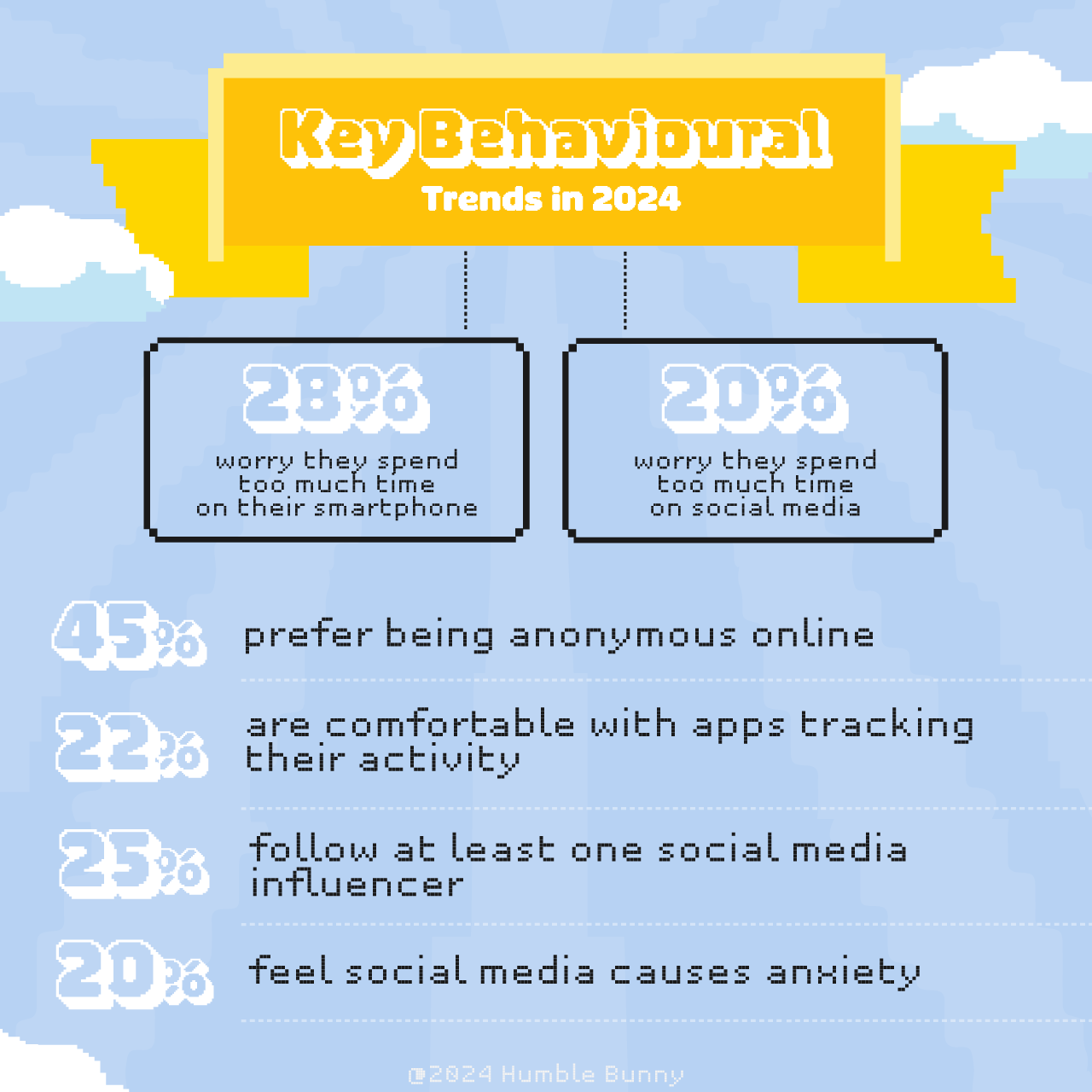
key behavioral trend in 2026 infographic showing digital habits: 28% worry they spend too much time on their smartphone, 20% worry they spend too much time on social media, 45% prefer being anonymous online, 22% are comfortable with apps tracking their activity, 25% follow at least one social media influencer, 20% feel social media causes anxiety, and 60% fear their information could be misused.

Want to learn more about ways to obtain conversions from your social media platforms?

Start growing on Japan’s top social media platforms with Humble Bunny.

LINE Japan

Overview

  • LINE is Japan’s most widely used social platform, reaching over 80% of the population across all age groups.
  • It’s success comes from deep cultural localization and everyday utility, not just messaging.
  • LINE functions as a true super app, integrating news, payments, shopping, entertainment, and brand interactions.
  • For brands, LINE Official Accounts enable direct, personal communication that feels less algorithmic than global platforms for engagement, retention, and conversion.
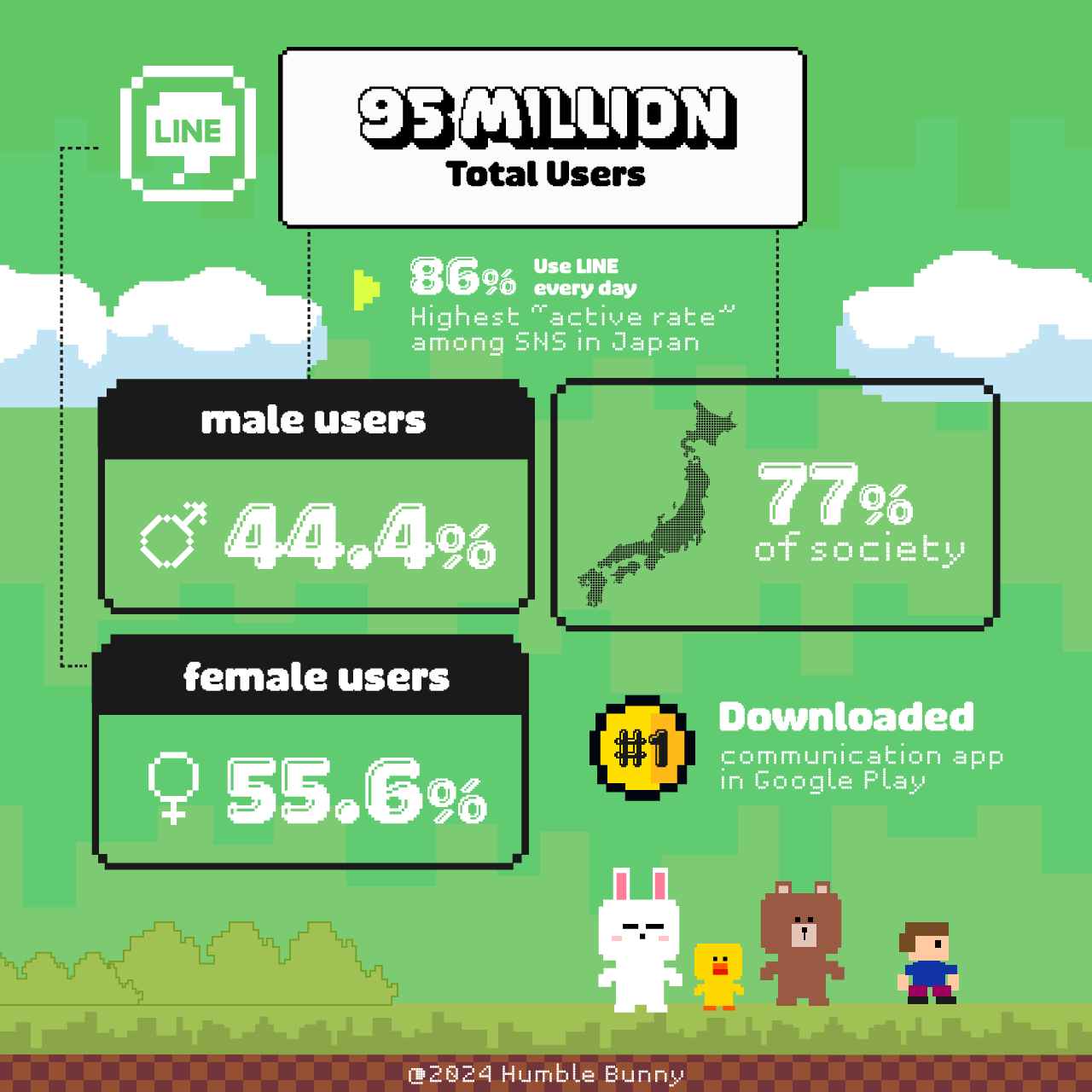
infographic illustrating line total users at 99 million, covering 80.5 percent of the country’s total population, with 52.8 percent female & 47.2 percent male.

LINE is Japan’s most famous super app, offering an array of features that go beyond communication alone. The app’s ecosystem now encompasses LINE Games, LINE Manga, LINE Shopping, LINE Pay, LINE Today (News), and more.

However, it initially gained popularity in the wake of the 2011 earthquake that resulted in thousands of deaths and an almost nuclear meltdown of the Fukushima Daiichi. During this time, the platform was developed as a simple way to facilitate communication between families using internet-based connections rather than the usual telecommunications infrastructure that was destroyed by the disaster.

Many took to LINE (over 50 million in the first year), partly as a way to stay connected in the event that phone lines dropped. Over 10 years on, its relevance remains strong in a country where natural disasters are always a possibility, with its usage also spiking during the start of the pandemic.

Importantly, LINE’s approach to localization has played a pivotal role in its popularity. The app regularly releases region-specific stickers, themes, and games that resonate with Japanese pop culture, seasons, and festivals.

By constantly adapting its content to align with local trends and preferences, LINE creates a sense of familiarity and cultural relevance that is simply not rivaled by other messaging apps like the globally popular WhatsApp, strengthening its appeal among Japanese users.

LINE Demographics
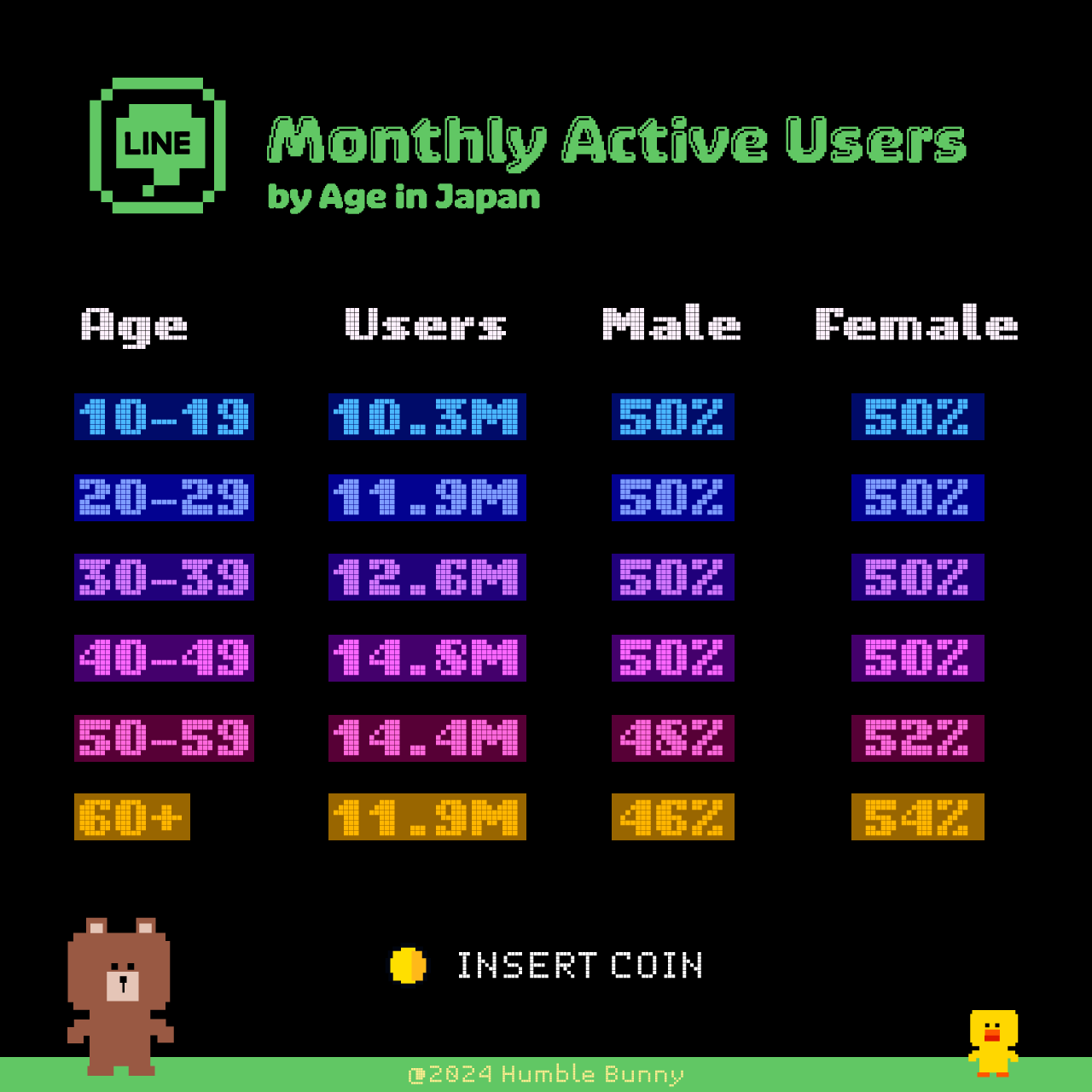
Percentage Within Each Age Group in Japan That Uses LINE

LINE demographics showing the percentage within each age group in Japan that uses LINE: teens 91.4%, 20s 92.2%, 30s 90.8%, 40s 84.3%.

With such a large user base, covering over 80% of the Japanese population, it’s no surprise that its demographic breakdown is spread fairly evenly—somewhat mirroring the demographic breakdown of Japanese society on the whole.

LINE’s vision is to become an all-encompassing hub serving the digital needs of all ages. For instance, it now offers more classic social media features such as LINE Voom (similar to Instagram Stories), media timelines, and news sections.

LINE Manga, which can be accessed through the LINE messaging app or as a dedicated app, has also become Japan’s largest digital comic service offering users an easy and convenient way to read manga and graphic novels while on the go.

LINE is a Japanese super app—offering an array of other features that go far beyond communication alone. LINE Games, LINE Manga, LINE Shopping, LINE Pay, LINE Today (News) are all part of the expanding ecosystem.

Top Countries That Use LINE

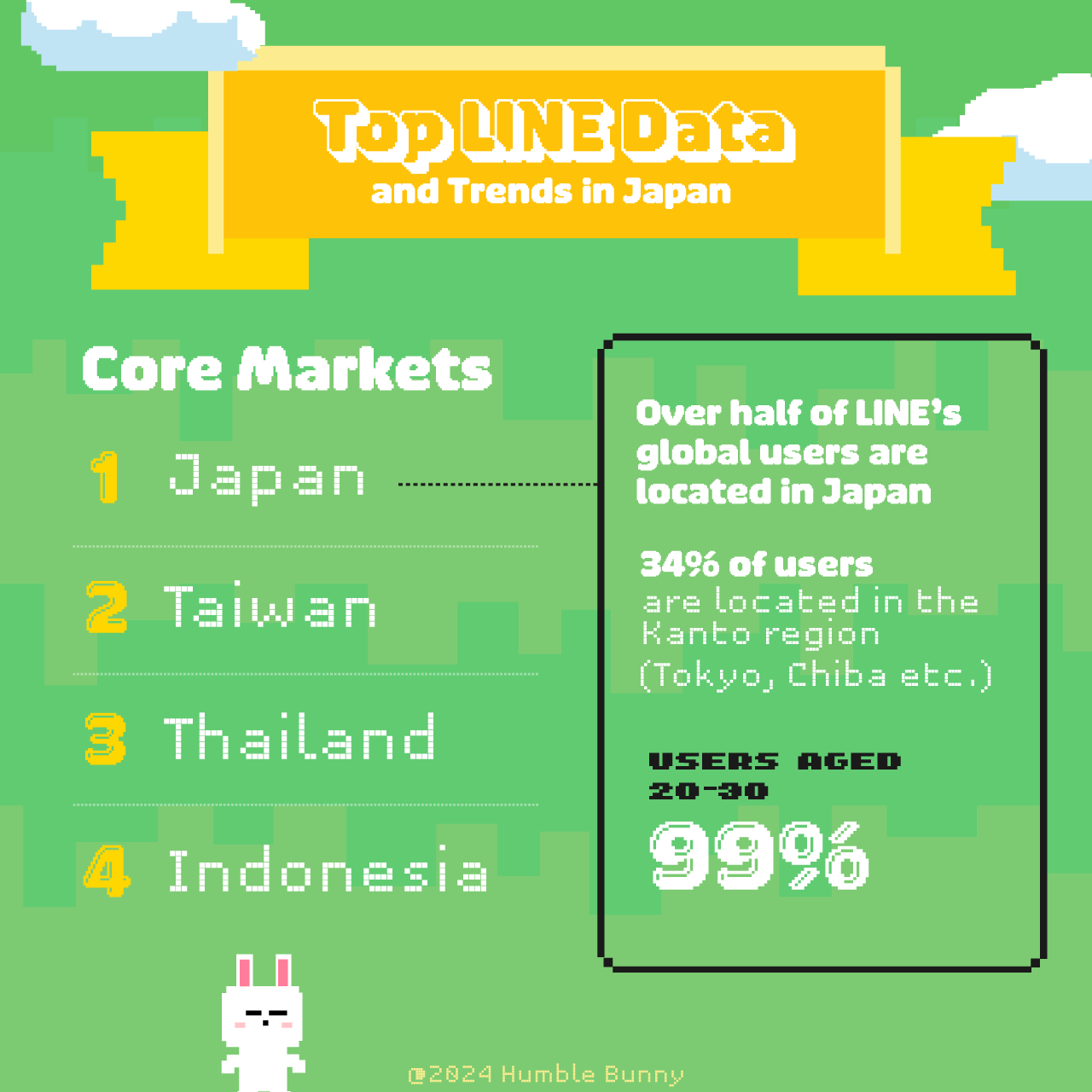
Top Countries that Use LINE by active users: Japan 99M, Thailand 51M, Taiwan 22M, Indonesia 13M.

Predictions for LINE in 2026

We expect even more businesses to leverage LINE Official Accounts as a customer service and retention tool. These accounts provide them with a direct channel to communicate with users, enabling them to share updates, promotional offers, and interactive content directly with their followers.

Features like chatbots also enable businesses to automate customer interactions and provide quicker responses in a nation that values customer service.

The benefits of LINE Ads are becoming more widely known too. And although many foreign brands entering the Japanese market may prefer using Meta Ads, its huge user base and the evolution of its advertising services are an attractive proposition.

How Brands Should Use LINE in Japan

In Japan, brands do not treat LINE as social media. They treat it as a customer relationship platform.

Through LINE Official Accounts, businesses can send coupons, restock alerts, booking reminders, and personalized broadcasts directly to followers. For many local shops and restaurants, LINE replaces email marketing entirely and acts as their primary customer database. Features such as rich menus, automated replies, and audience segmentation allow brands to communicate with customers in a way that feels timely and relevant rather than promotional.

Another uniquely Japanese tactic is “sticker marketing”. Brands release free custom sticker sets in exchange for a follow. Because users send these stickers daily in private chats with friends and family, the brand becomes part of everyday conversations. This creates organic visibility and familiarity that traditional advertising cannot replicate.

LINE also shortens the path from discovery to purchase. With integrations such as LINE Shopping, mini apps, and LINE Pay, users can browse products, make reservations, and complete payments without ever leaving the app.

What makes LINE especially powerful is that brand messages do not feel like ads. They feel like hearing from a familiar shop or trusted brand in a space users already associate with personal communication. This is why LINE consistently drives higher engagement, loyalty, and conversions for businesses operating in Japan.

Humble Bunny Pro Tip
Use LINE’s AI-driven chatbots to streamline customer service and boost user satisfaction. This is especially effective for e-commerce businesses looking to offer 24/7 support.

Humble Bunny Social Media Case Study: ETRO JAPAN DIGITAL ADVERTISING (PPC) OMNICHANNEL STRATEGY

In our work with Etro Japan, we used LINE Ads and other paid channels (YouTube, Meta, and Search) as the backbone of an omnichannel strategy that consistently moved the needle for the brand. But beyond paid performance, this campaign also leaned into organic content creation, posting content that sparked discovery, built affinity, and kept Etro visible where Japanese consumers naturally engage. These combined strategies helped strengthen Etro’s brand story and increased meaningful touchpoints throughout the customer journey and delivered strong measurable gains, including:

  • Revenue From CPC: +1,469%
  • Transactions From CPC: +923%
  • E-commerce Conversion Rate From CPC: +155%

What worked organically

  • Scheduled posts aligned with platform best practices (e.g., Instagram posting cadence optimized around Japanese user peak hours).
  • Built content with culturally resonant themes and visuals that reflected both Etro’s heritage and local audience interests on all platforms.
  • User-focused captions and storytelling that encouraged saves and shares, increasing organic visibility.

This balanced approach to organic content and paid amplification helped Etro increase brand relevance in Japan’s fashion ecosystem.

Etro Japan Digital Advertising (PPC) – Read the full case study

YouTube

Overview

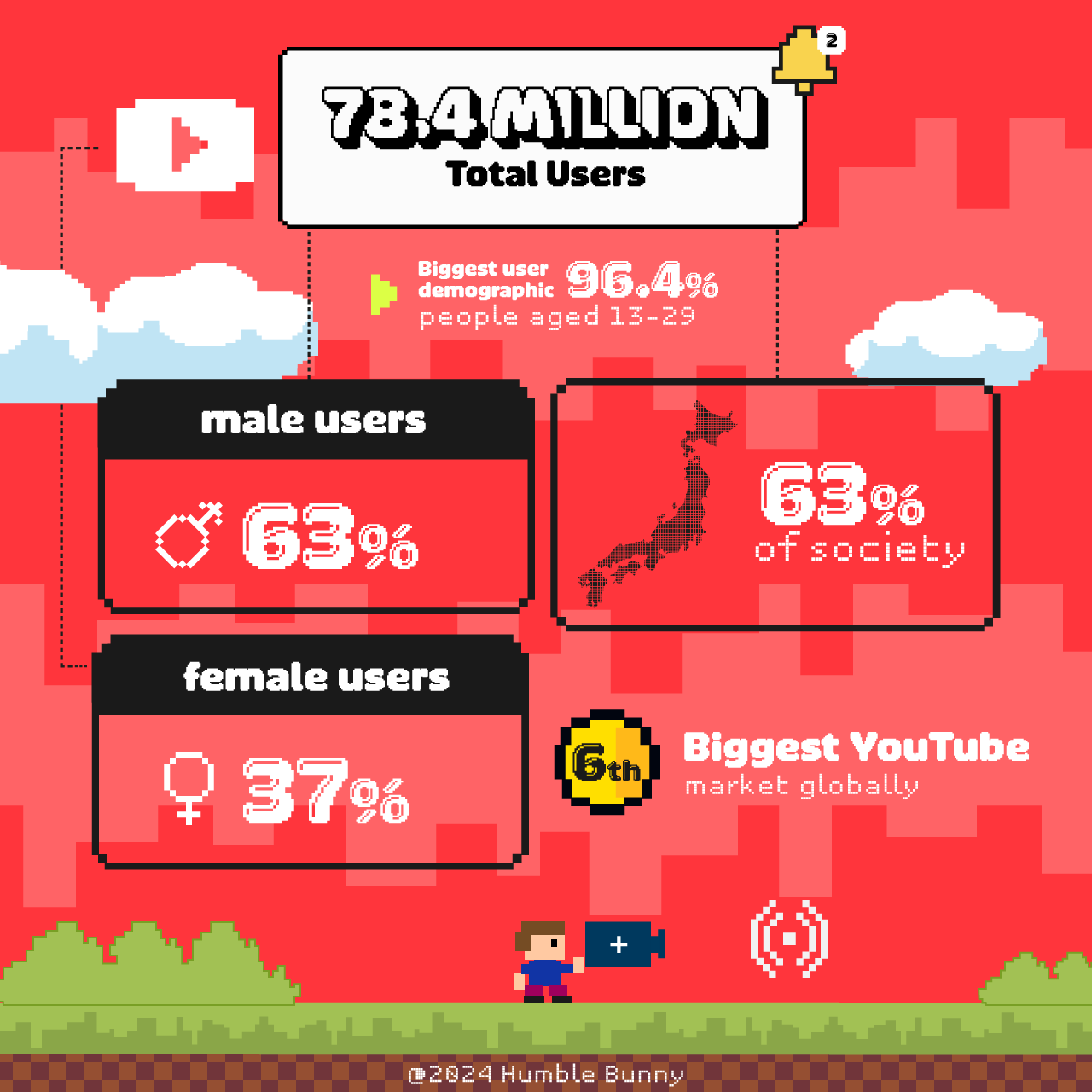
  • YouTube continues to dominate Japan’s video landscape, reaching 78.5 million users and functioning as a go-to alternative to traditional TV.
  • Usage is deep and widespread, with strong adoption across all age groups and especially high penetration among people in their teens through 40s.
  • As trust in traditional institutions declines, creators play a central role in shaping opinions, particularly among younger audiences who value familiarity and consistency.
  • Influencer-led content drives action, with nearly half of users making purchases after watching YouTube creator videos.
  • In 2026, Shorts act as the entry point, while long-form videos are where trust, storytelling, and conversion happen.
  • Brands that perform best approach YouTube as a connected ecosystem, combining creators, formats, and SEO into a cohesive, full-funnel strategy.
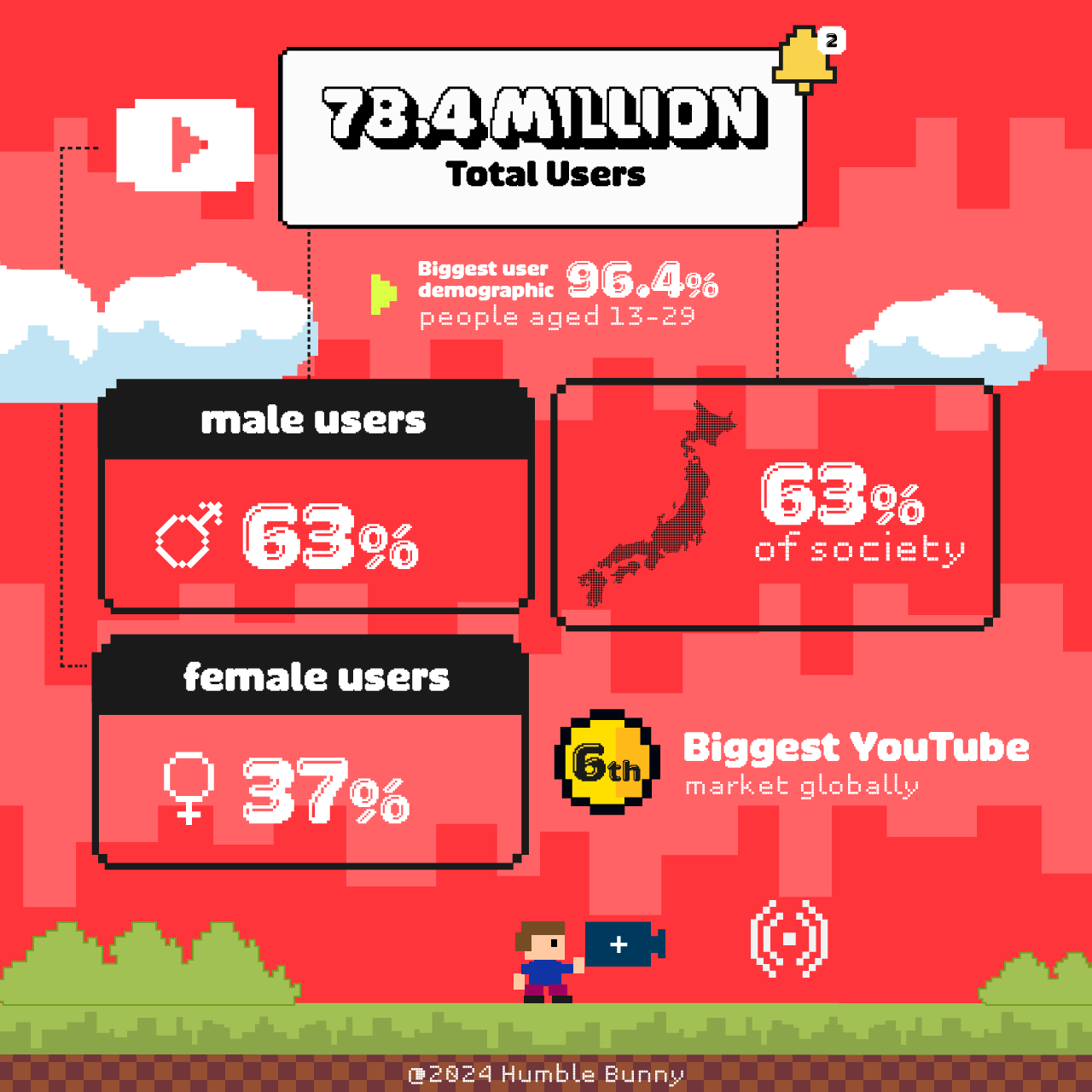
Illustrated data graphic showing YouTube total users in Japan at 78.5 million users, accounting for 63.9 percent of Japan’s total population, with a gender split of 48.4 percent female and 51.6 percent male.

While not a traditional social media channel, YouTube’s role as a platform for consuming and sharing video-based content is formidable in Japan. It is often at the heart of trends that go viral across the nation, such as Mukbang, a popular online phenomenon in the Asia Pacific where individuals, known as hosts or broadcasters, consume huge quantities of food while interacting with their audience.

The likes of Amazon, Disney+, and Netflix have done well in the region, yet YouTube remains Japan’s most used video platform, partly thanks to its free-to-use nature but also for the sheer diversity of content you can find here, ranging from educational videos and daily news to anime and comedy.

In fact, many households in Japan consume content on YouTube as a kind of substitute for TV (aided by the widespread use of smart TVs and strong WiFi connections).

YouTube Demographics
Percentage Within Each Age Group in Japan That Uses YouTube

YouTube demographics graph showing the percentage within each age group in Japan that uses YouTube, with 90% teens–40s, 80% 50s, 70% 60s, 40% 70s.

We’ve seen YouTube’s age distribution shift largely towards younger users over the last few years. A growing number of contemporary vloggers and YouTube stars pull in huge numbers of fans under 30.

Notably, the act of seeing someone appear on YouTube frequently is the number one reason among men aged 15-24 for trusting influencers and celebrities, with 42 per cent stating this as their primary reason for doing so in a 2023 survey.

In a nation with a low level of trust for organizations, vloggers and YouTube stars provide an unfiltered way to track current events and learn about the world. From daily events coverage to product reviews and unboxings, YouTube plays a vital role in the online experience for many Japanese.

Most Popular VIDEO PLATFORM in Japan

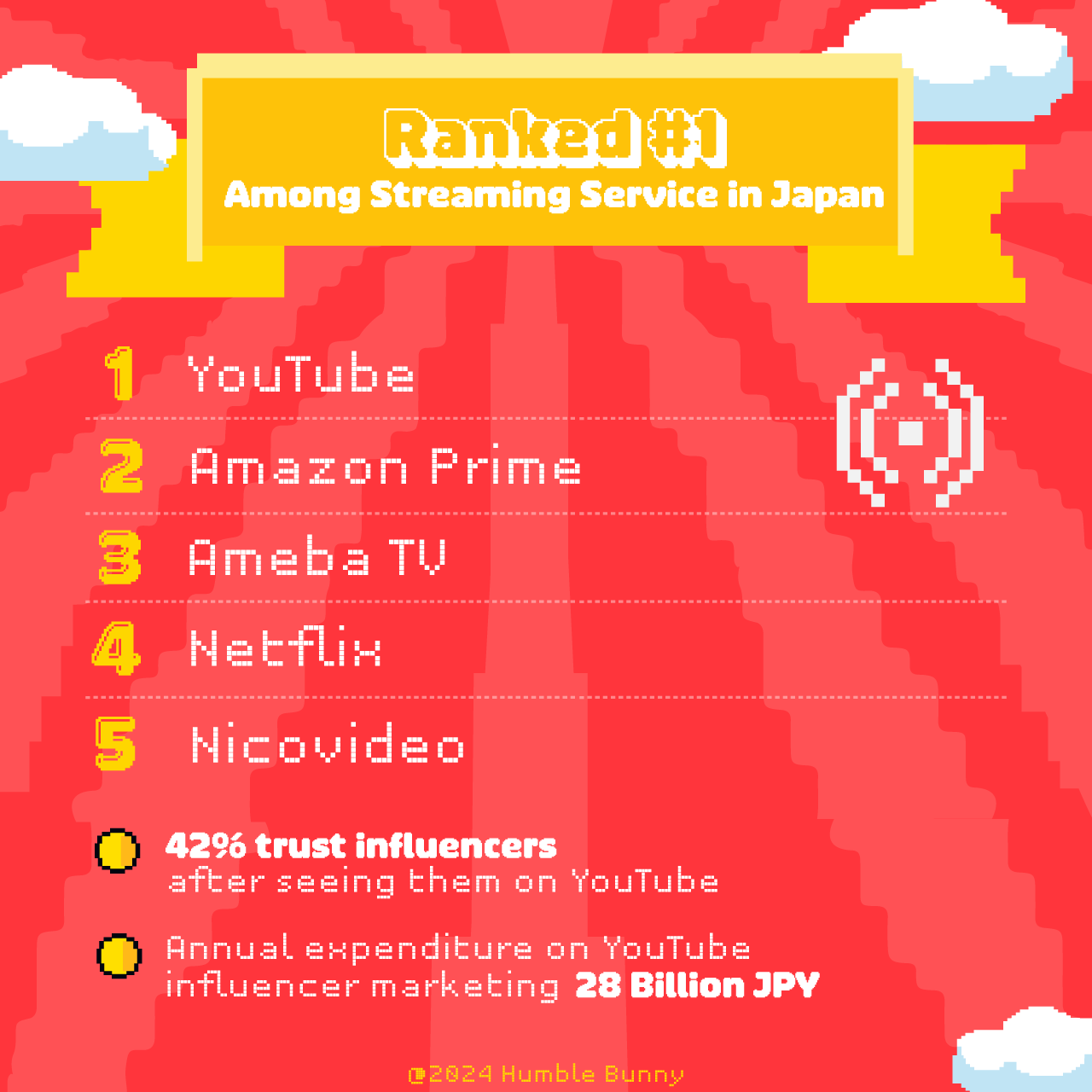
most popular video platforms in Japan ranking with YouTube leading, followed by Amazon Prime, Netflix Japan, U-NEXT, and Disney+, showing 44.5% purchased after a YouTube influencer video and annual expenditure on YouTube influencer marketing to reach ¥48.7 billion by 2027.

Top 5 Influencers on YouTube

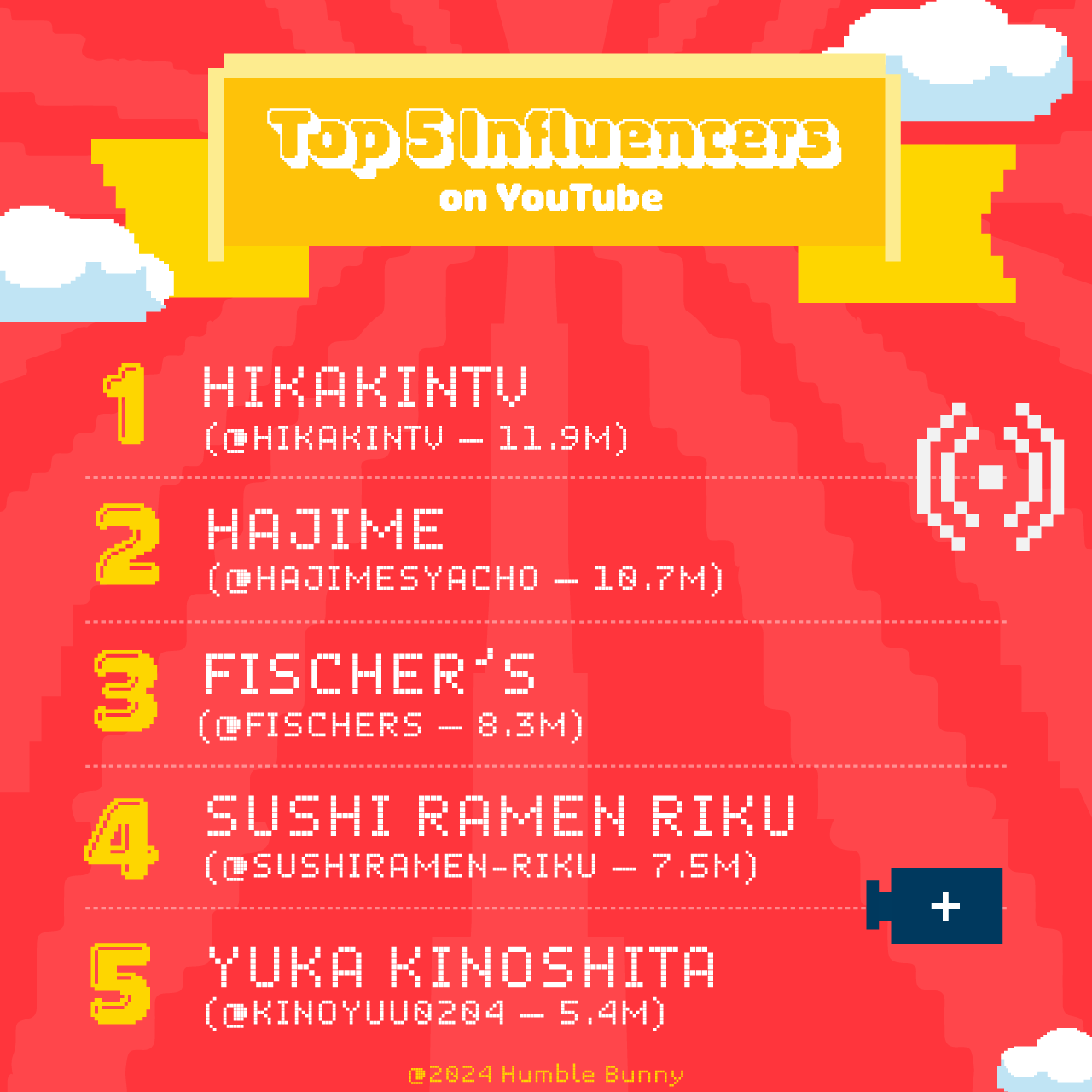
top 5 influencers on YouTube ranked in a pixel infographic: ISSEI 71.8 million, Junya Official Channel 38.7 million, Sagawa 38 million, Saito 35.9 million, Hayataku 22.8 million.

Predictions for YOUTUBE in 2026

  • YouTube’s influencer network will continue to expand. Brands will continue to look for ways to capitalize on the attention received by various channels by sponsoring the individuals and groups who own them to feature their content or products.
  • In line with the expected growth on other platforms, YouTube influencer marketing is predicted over the next few years (reaching 48.7 Billion JPY by 2027)—driven by consistent user numbers and a recognition of the power this method of marketing can have when it comes to changing people’s perceptions and purchasing choices.
  • AI will remain an important tool on YouTube, primarily supporting production rather than replacing creative input. As the platform matures, both the algorithm and viewers will prioritize standout content with originality and stronger production value.
  • In 2026, Shorts are evolving into a gateway rather than a standalone format. Instead of Shorts and long-form videos operating separately, YouTube is increasingly connecting these formats to guide viewers from quick discovery to deeper engagement. Shorts will continue to play a key role in reaching new audiences quickly and organically, while long-form content is where trust, loyalty, and meaningful relationships are built.
  • We expect to see more reviews, unboxings, ASMR, anime, “live eating” content (Mukbang genre), gaming, live-streaming and prank-based content do well on YouTube in 2026.

How Brands Should Use YouTube in Japan

For brands in Japan, this shift means approaching YouTube as a structured content ecosystem rather than a single video platform. Shorts can be used to drive discovery and campaign reach, while longer-form videos build trust through education, storytelling, and deeper creator collaborations.

As many users now treat YouTube as a search engine, optimizing titles, descriptions, and keywords is just as important as the video itself. Brands that plan content across formats, integrate influencer partnerships into a wider SEO strategy, and maintain consistent uploads are better positioned to guide audiences from awareness to consideration. In a market where credibility and relevance strongly influence purchasing decisions, YouTube offers a strong balance of reach, trust, and long-term visibility when used strategically.

Humble Bunny Pro Tips

  • Advertising in Japan? Using YouTube video ads at the start of your sales funnel can drive much better performance overall, especially when you are launching retargeting campaigns. Just make sure you feature plenty of domestic appeal and include local models and environments to improve engagement.
  • Collaborate with local creators to build authentic campaigns that resonate deeply with Japanese audiences. Consider tapping into trending content themes like “real-life challenges” or “behind-the-scenes” videos to foster relatability.

X (Twitter)

Overview

  • X (formerly Twitter) remains a core social platform in Japan, despite platform changes and competition from Threads. Japan is X’s second-largest market globally, outperforming Facebook locally.
  • Real-time news & information: Japanese users instinctively turn to X for breaking news, natural disasters, transport disruptions, and government updates.
  • Strong cultural fit: Preference for online anonymity (45%) and bite-sized content makes X align with Japan’s urban, commute-heavy lifestyle.
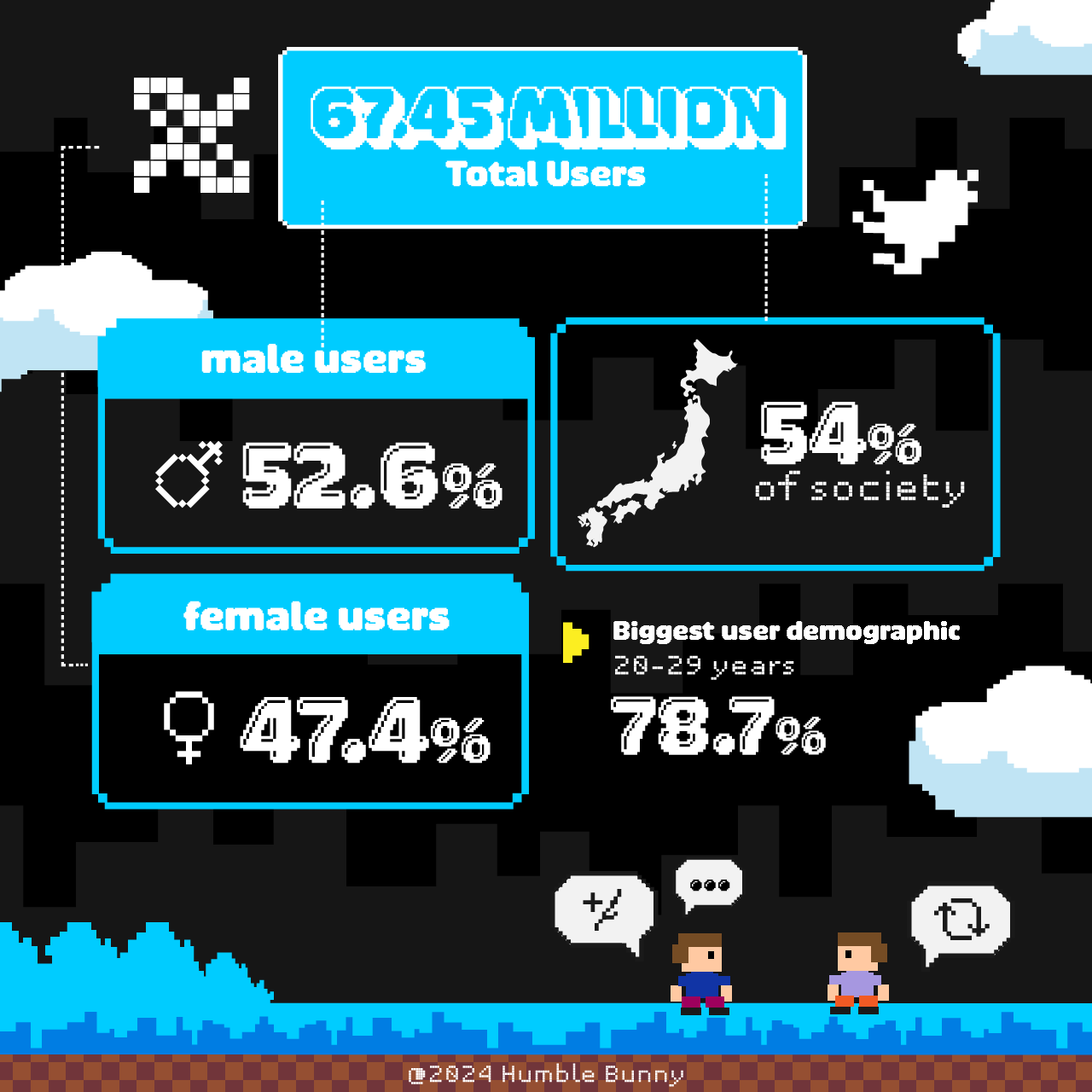
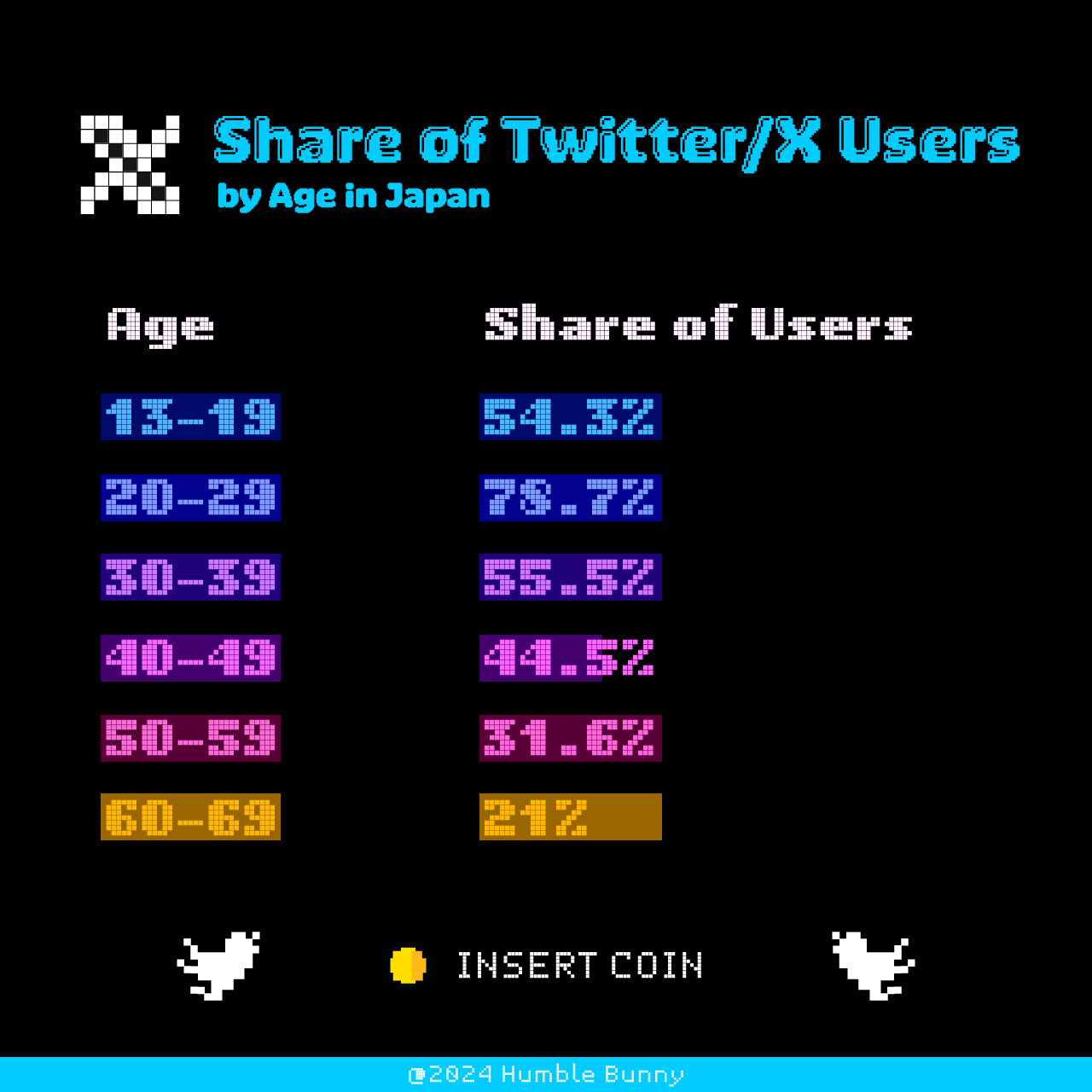
  • Broadening demographics: Usage is strongest among users in their 20s (81.6%), but adoption is growing across older age groups, driven by active politicians and official accounts.
  • Brand-led ecosystem: Top accounts are dominated by major brands and public figures (e.g., Lawson, Starbucks Japan), reinforcing X’s role as a public information channel.
X total users infographic showing 71.2 million users in Japan, 57.9% of Japan’s total population, Female 50.6%, Male 49.1%, and 20s at 81.6%.


Despite several changes to the Twitter platform (now X) since its acquisition by Elon Musk, as well as the launch of Threads—Meta’s new microblogging alternative—it is still a cornerstone of Japan’s social media landscape.

Dominating over Facebook in terms of popularity (another reality that differs from the global norm) Japan is X’s second largest market after the US. Below are a few reasons why:

  • X (Twitter) has become an essential source of news and information in Japan, made even more effective by the fact that so many of the nation’s politicians, thought leaders and notable figures are highly active users. It is common for users to first hear of major events or government policy updates on X rather than traditional TV broadcasting outlets.
  • 45% of social media users in Japan prefer to be anonymous on social media, keen to voice their opinions and concerns online but reluctant to do this under their own real name. The X app has always offered better online anonymity compared to Facebook while still allowing people to engage in online conversions and stay in the know.
  • X (Twitter) offers a vibrant ecosystem in Japan, with millions of tweets going out each day from all kinds of users ranging from politicians and celebrities to comedians and famous gamers.
  • Over 92% of the Japanese population live in urban areas and spend a huge amount of time on busy public transport. X’s smooth mobile UX and bite-size chunks of content make it easy for users to get what they want quickly, while on the move.

X (Twitter) gives users a glimpse into what’s going on in their world, and, more importantly, makes it easy to do this quickly.

X (Twitter) Demographics

X (Twitter) demographics in Japan by age group: 10s (teenagers) 65.7%, 20s 81.6%, 30s 61.0%, 40s 47.3%, 50s 37.0%, 60s 19.6%.

X’s growing popularity across a wider range of ages in Japan has prompted brands, influencers, and marketers to consider the channel as a way to connect with audiences, both young and old.

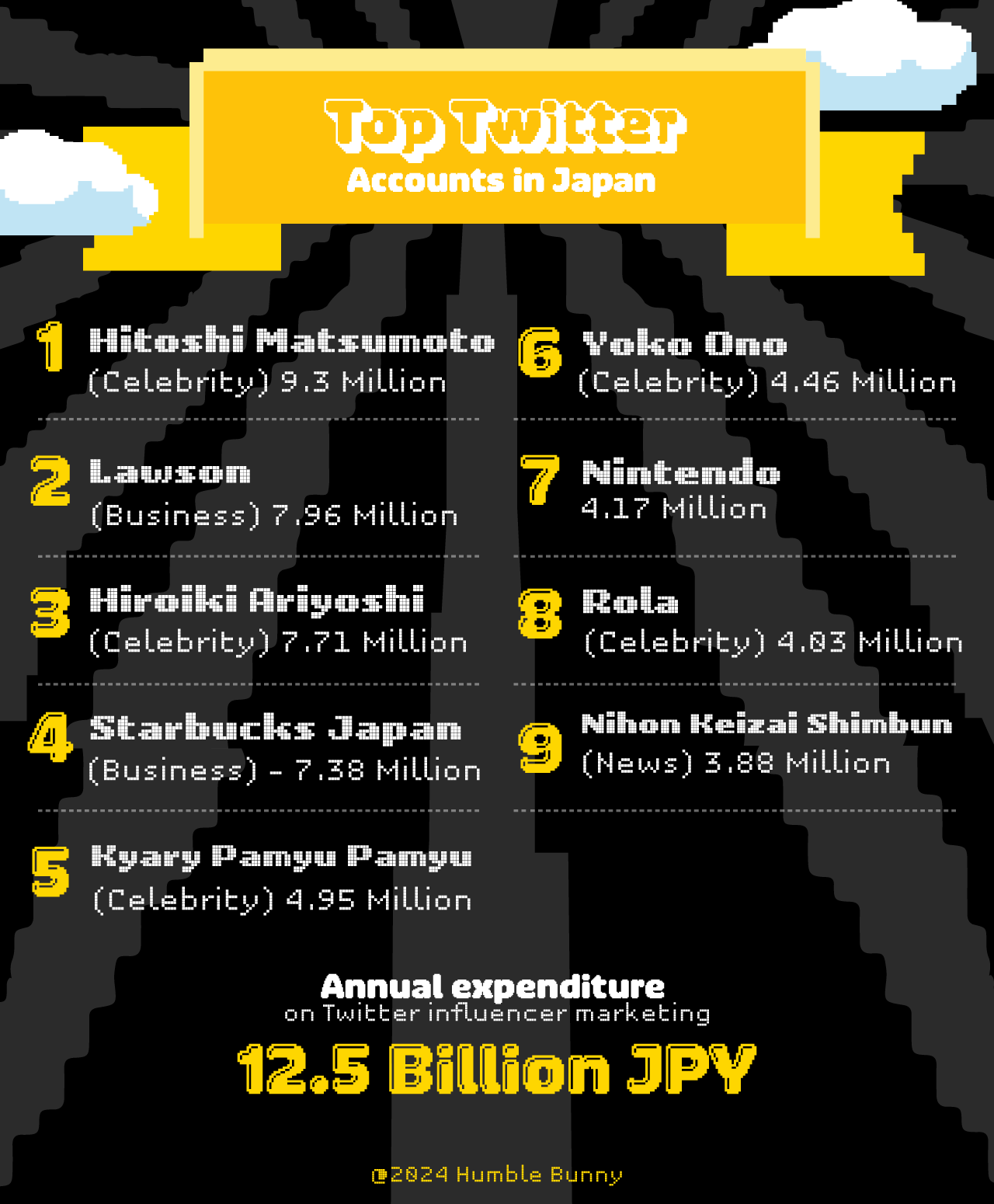
In Japan, the ten most followed X accounts are dominated by major brands, with companies like Lawson, Nintendo, and Starbucks Japan leading the list.

The prominence of politicians and government spokespeople on the app has brought many older users to the platform, historically considered almost unreachable on X (Twitter).

The delivery of fast (sometimes immediate) updates and news about important issues in Japan, especially related to natural disasters or, as we have seen recently, guidance related to Covid-19, makes it a tool that many people see as indispensable.

Top X (Twitter) ACCOUNTS in Japan

top 5 X (Twitter) accounts in Japan by followers: Yusaku Maezawa and Hitoshi Matsumoto 9.7M, Starbucks Japan 9.2M, Lawson 8.7M, Hiroiki Ariyoshi 7.6M; influencer marketing predicted to exceed $40B globally by 2026

PREDICTIONS FOR X (TWITTER) IN 2026

X is expected to further cement it’s role as the platform Japanese users instinctively turn to during breaking news moments, such as natural disasters, transport disruptions, political announcements, and major cultural events. Speed and accessibility remain key, and X continues to outperform other platforms in delivering immediate, public updates at scale.

By carefully monitoring conversations and looking for key trends and themes, brands and marketers can better understand the way people think and feel across a range of topics.

We haven’t seen advertisers scared away from using X as an advertising channel to the same extent as other markets like the US, where brands like Chevrolet, Chipotle, and Ford discontinued their X (Twitter) Ads following several controversial individuals having their accounts reinstated under Musk’s “free speech absolutism” policy.

That said, decorum and etiquette are key principles in Japanese culture and communication. If a lack of moderation or reliable user verification fundamentally changes the kind of standards users can expect, it may not be surprising if this changes the popularity of X among certain user demographics.
How Brands Should Use X in Japan

In Japan, brands should treat X as a real-time customer communication channel, not a scheduled content feed. Users turn to X for immediate answers during service updates, public issues, or when directly tagging a brand with a question.

Success depends on active monitoring and fast responses rather than frequent posting. Brands should prioritize replying to mentions, sharing timely updates, and providing clear clarification when needed.

On X, Japanese users value brands that feel accessible, transparent, and responsive in the moment.

Humble Bunny Social Media Case Study: Localized social media strategy for DAILYFX Japan

As discussed in the X section above, strong performance in Japan often begins with real-time engagement. However, long-term results rarely come from a single platform. This case demonstrates how an omni-channel SNS strategy, including X as a key platform delivered measurable results in Japan.

Understanding Japan’s social media landscape is only the first step. Sustainable growth depends on how well a brand adapts its messaging, creative direction, and pacing to Japanese audience expectations.

At Humble Bunny, we applied this approach when developing a localized SNS strategy for DailyFX Japan, a global financial news and trading brand. Our objective was to increase brand awareness, drive website traffic, and generate demand for the IG trading platform through organic social media channels.

Rather than directly translating global assets, we conducted in-depth market research to understand how Japanese users engage with financial content across X, Instagram, Facebook, and LINE. Japanese audiences prioritize educational value, clarity, and credibility. Hard-selling tactics tend to reduce trust, while insight-driven content builds stronger engagement over time.

We localized the brand voice, visual identity, and user experience specifically for the Japanese market. This included developing custom brand guidelines to ensure consistency across channels while adopting a more casual and colorful design approach aligned with Japanese preferences. Organic and paid strategies were integrated into a unified customer journey designed to build trust before conversion.

Instagram feed of DailyFX Japan

social media strategy visuals from a Daily FX brand case study showing visual design examples, educational trading content, and branded layouts.

By aligning creative, messaging, and campaign pacing with Japanese expectations, we delivered measurable performance improvements:

  • 30%+ average monthly follower growth
  • 110.29%+ increase in click-through rate (CTR)
  • 69.85% reduction in cost per acquisition (CPA)
  • 46.99% reduction in cost per click (CPC)

This case reinforces a central takeaway from Japan’s SNS ecosystem: platform presence alone is not enough. Success requires thoughtful localization and a strategy built around how Japanese users evaluate, engage, and convert.

social media strategy visuals from a Daily FX brand case study showing visual design examples, educational trading content, and branded layouts.

Localized social media strategy for DAILYFX Japan – Read the full case study

Facebook

Overview

  • Facebook in Japan plays a LinkedIn-like role: It’s not a mass-market social network, but a professional one, used largely by working adults, senior professionals, and B2B decision-makers.
  • The audience skews older (35+) and more established, with nearly half of users falling into higher-income, career-focused demographics, making Facebook a strong channel for premium products, services, and B2B marketing.
  • Privacy concerns and early localization issues slowed Facebook’s growth in Japan from the start, and it never regained momentum, but it has settled into a stable, clearly defined niche.
  • Still powerful for paid social, especially when paired with Instagram’s ad infrastructure, allowing brands to target by age, profession, interests, and location with high efficiency.
  • A trusted platform for social proof, where real-name profiles make reviews, ratings, and brand pages feel more credible during pre-purchase research.
  • Best used for mid- to lower-funnel goals, not virality — think authority, trust, community building, and long-term brand value rather than rapid reach.
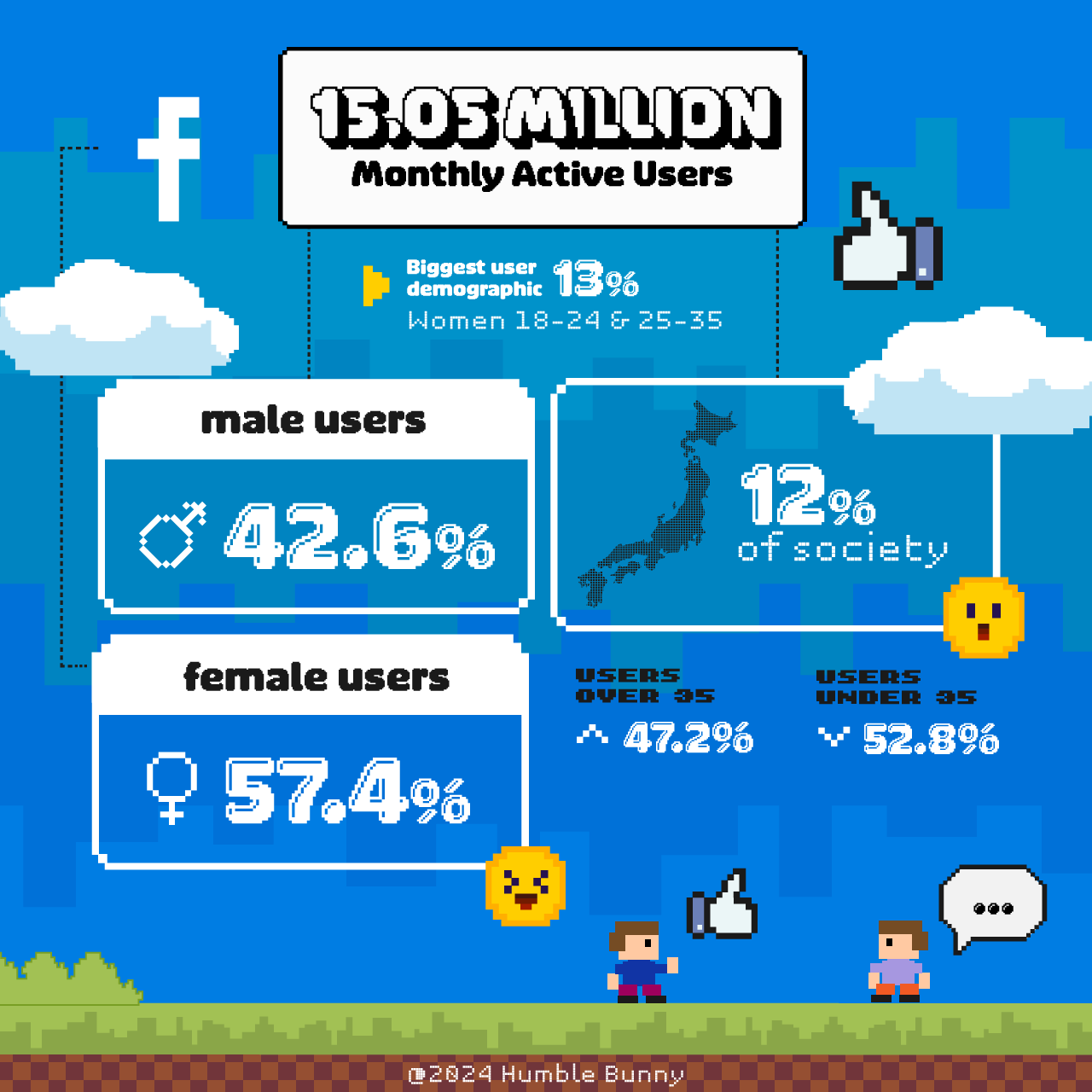
Facebook monthly active users in Japan reached 16.5 million in late 2025, representing 13.4% of the population, with 55.8% male and 43.6% female users.

Facebook’s role in Japan is similar to that of LinkedIn in other countries. With a modest following, its user base is made up largely of working professionals using the platform as a networking tool.

You’ll find a huge number of senior-level professionals using it as well as official business pages, which makes it an active space for B2B selling of professional services and products.

It is clear that Facebook still has a much lower user base overall when compared with other markets. A few reasons Facebook “failed” to capture the Japanese market are:

  • When it first launched in Japan, its real name policy and model of open sharing and interconnected social circles made it harder for users to remain anonymous. Many were concerned about invasion of privacy and were reluctant to engage in online conversations when there was a chance their colleagues or bosses may be able to track their actions.
  • Due to the above, the escapism element of social media was reduced, making users more self-conscious when interacting with other accounts and content. And for many, not having an account was preferable to having one and being overly cautious in how it was used (a problem not presented by X/Twitter).
  • Facebook’s interface and language have not always been as user-friendly for Japanese speakers. The platform’s early versions were primarily in English, which posed a barrier for native Japanese speakers. Better efforts to localize UI/UX and features can be seen on other platforms like LINE.
  • In the end, Facebook has never been able to recover from its lack of growth velocity in the initial months and years after launching.

Facebook Demographics
Percentage Within Each Age Group in Japan That Uses Facebook

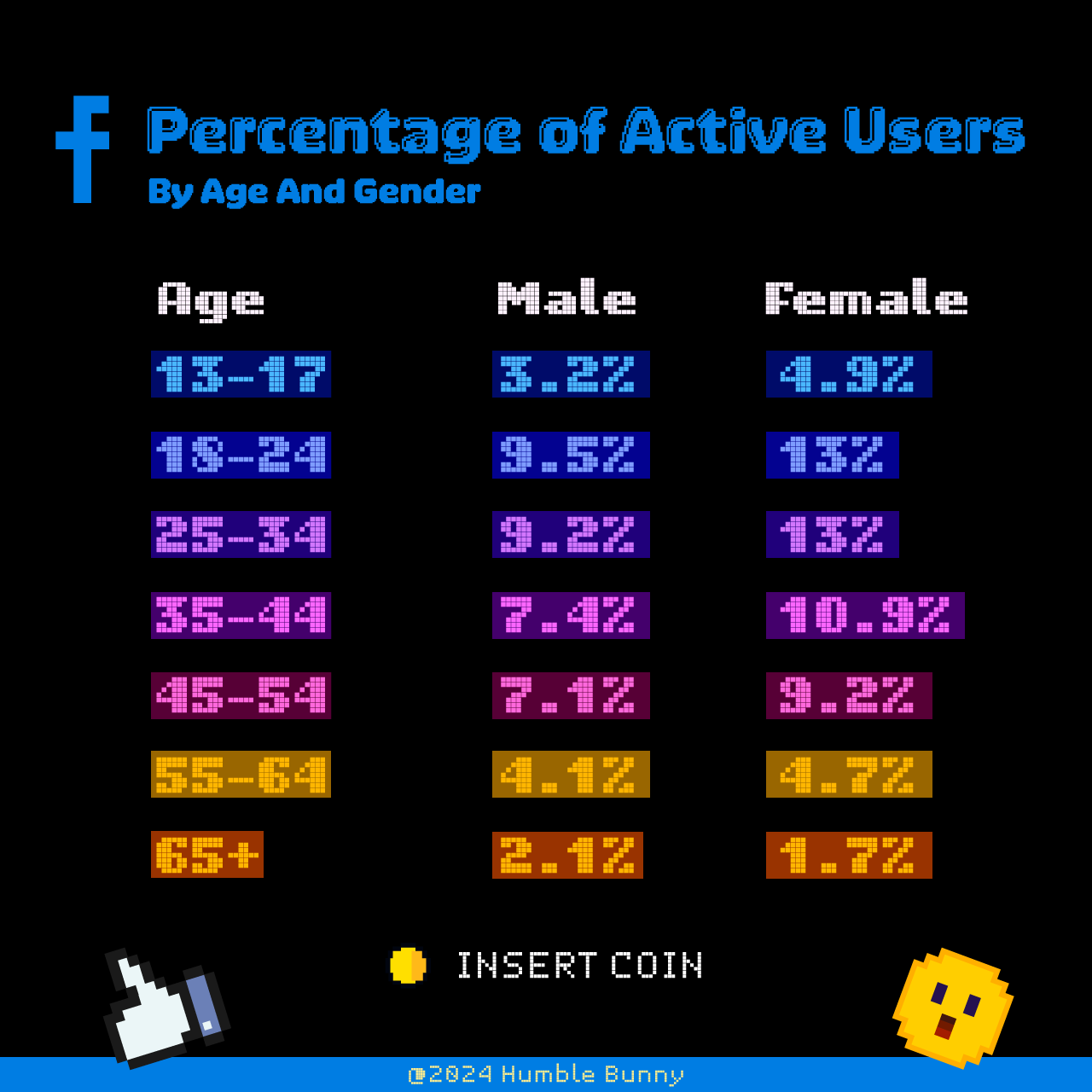
Facebook demographics by age in Japan showing percentage within each age group in Japan that uses Facebook: 10–19 (14%), 20–29 (23%), 30–39 (39%), 40–49 (38%), 50–59 (32%), 60–69 (27%), 70+ (8%)

A lack of younger users is one of the most notable trends on Facebook in Japan. And there’s no doubt that with visual platforms like TikTok capturing people’s attention through video-based content, Facebook has found it even harder to both attract and retain a younger audience.

That said, the platform’s combined user reach with Instagram and its advanced targeting options still offers a viable option for brands looking to reach specific groups of people with paid social media ads—especially working professionals with higher disposable incomes.

TOP FACEBOOK PROFILES IN JAPAN

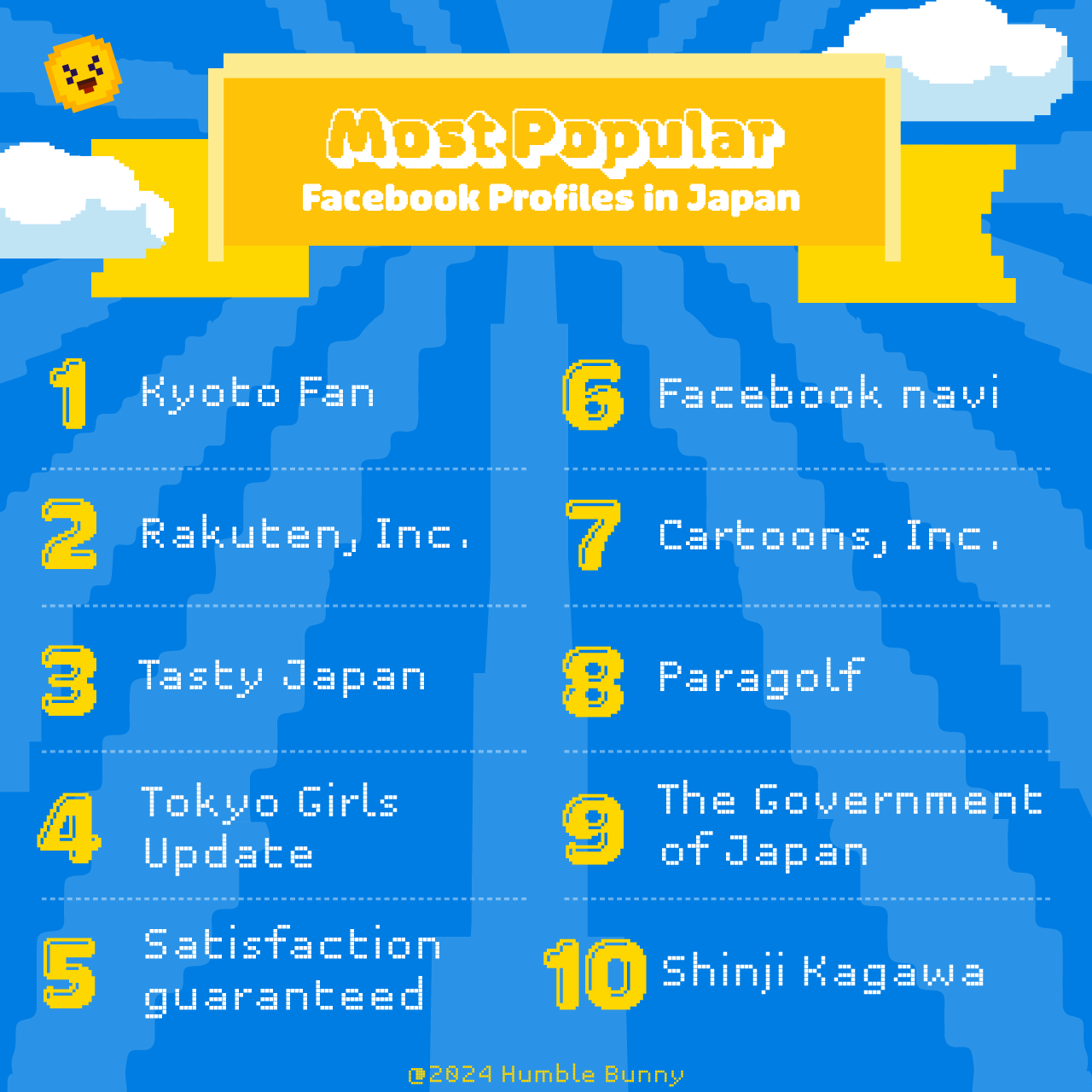
graphic showing the 5 most popular Facebook profiles in Japan ranked by number of likes: 1. Kyoto Fan (9.5M likes), 2. Rakuten, Inc (7.4M), 3. Tasty Japan (6.1M), 4. Tasty Girls’ Update (4.4M), 5. Satisfaction Guaranteed (4.1M).

PREDICTIONS FOR FACEBOOK IN 2026

LINE and TikTok offer new opportunities for advertisers to reach younger audiences with brand content and ads, however, those in the B2B sector will still find Facebook the perfect space to make connections with high-value customers and clients.

Although reforms have been made in this area, age (years of experience on the job) is still a primary determiner of someone’s income, rather than skill level or qualifications. One result of this is that older demographics are often the most viable target groups for more expensive products and services.

Knowing this, businesses will continue to use Facebook as a strategic way to connect with working professionals over 35, making up almost half of the platform’s total users.

Also, we still see Facebook as an important tool for providing social proof to prospective customers engaged in pre-purchase research. The fact that Facebook uses real names also makes reviews and ratings much more credible and many Japanese shoppers still use it as an important stepping stone in their digital purchasing journeys.

How Brands Should Use Facebook in Japan

Brands in Japan should use Facebook as a precision advertising and community-building platform, not a channel for organic discovery.

Its strength lies in detailed audience targeting, making it effective for consideration and conversion campaigns, especially when paired with Instagram through Meta’s ad system. Rather than focusing on regular posting, brands should prioritize paid campaigns aimed at specific age groups, interests, professions, and locations.

Facebook Groups also offer an opportunity to build trust within niche communities, where users prefer private, interest-based interaction over public feeds.

For B2B and higher-value products or services, Facebook works well for sharing credibility-driven content, event promotion, and maintaining familiarity with older, established audiences.

Humble Bunny Pro Tip

To succeed on Facebook, focus on creating authentic, long-form content such as behind-the-scenes stories, video testimonials, or industry insights that resonate with the professional and interest-driven audience.

Humble Bunny Case Study: Soleil Provence — Organic Facebook Traffic Fueling Meta Conversions

Before launching paid campaigns, we focused on strengthening Soleil Provence’s organic Facebook presence to increase qualified website traffic, drive free trial lesson sign-ups, and improve future Meta ad efficiency using real performance insights. Content highlighted authentic classroom moments, French culture tips, and clear promotional offers — including free trials, 1:1 lessons, and limited discounts — all linked directly to the booking page to build trust and attract high-intent visitors.

We then used insights from the highest-traffic posts to inform Facebook-first Meta ads with hyper-local and interest-based targeting. One ad creative inspired directly by organic content generated 62.5% of total leads.

Results

  • 6.3 ROAS within the first week
  • 44% decrease in CPC within one week

In Japan, strong organic Facebook content doesn’t just support paid ads, it improves traffic quality, reduces acquisition costs, and increases overall Meta conversion performance.

6.3 ROAS from Meta Ads: French Language School’s Success Story – Read the full case study

Wondering How to Convert Facebook Users into Loyal Customers?
Instagram

Overview

  • Built for Japan’s visual culture: Instagram remains a natural fit thanks to its photo and video first format, supporting visual storytelling, trends, and shared experiences.
  • A trend validation platform: In a collectivist market, Instagram helps users and brands verify what’s cool, especially across fashion, beauty, food, and lifestyle.
  • Younger, high-value audience: Usage is strongest among teens to 30s, making Instagram essential for brands targeting younger demographics via Meta ads.
  • Video drives growth: Reels and Stories dominate engagement in Japan, with short-form video prioritized by the algorithm.
  • Local creators matter more: Domestic influencers outperform global celebrities in trust and purchase influence, making local, long-term partnerships more effective.
  • Now part of search: Japanese users increasingly use Instagram like a search engine, rewarding clear captions, hashtags, and geo-tags.
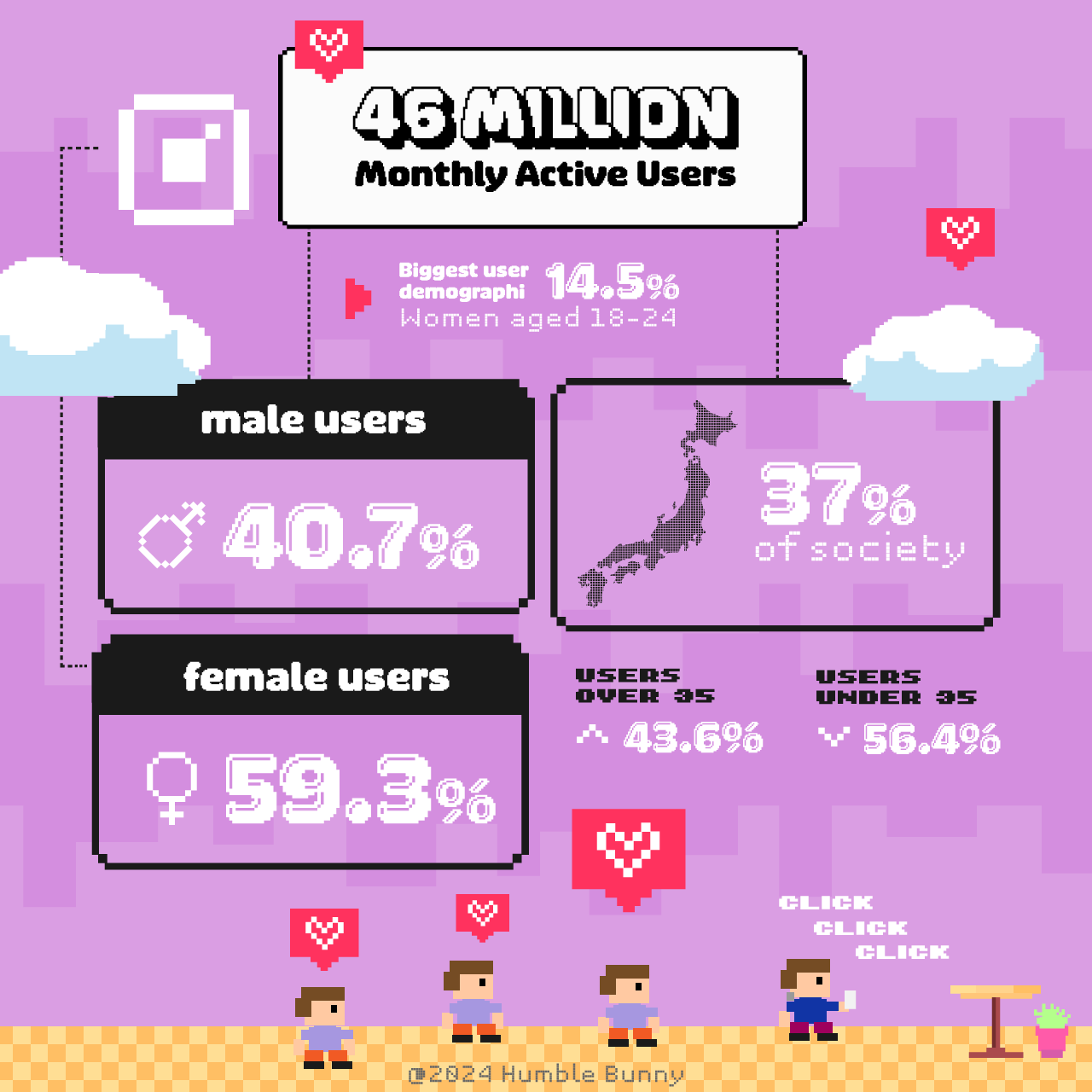
Instagram monthly active users: 57.5 million users, 46.5% of society. Men 46.5%, women 52.5%, under 35 years old 62.3%, over 35 years old 31.5%.

Japan has a rich visual culture and Instagram has always aligned well with this. The emphasis on photos and videos allows users to express creativity, share experiences, and showcase their interests visually, making it appealing to individuals who appreciate visual storytelling.

The platform is also powerful when it comes to solidifying wider trends in fashion and lifestyle in Japanese society. As a highly collectivist culture where standing out isn’t as cool as it is in other countries, Instagram has become a central way to verify what’s cool and what’s not.

Also, Instagram’s pleasing UX on mobile phones and the introduction of new video features (Reels, IGTV and Stories) give the platform more modern relevance, allowing people and brands to publish candid glimpses into real life and behind the scenes.

Instagram Demographics
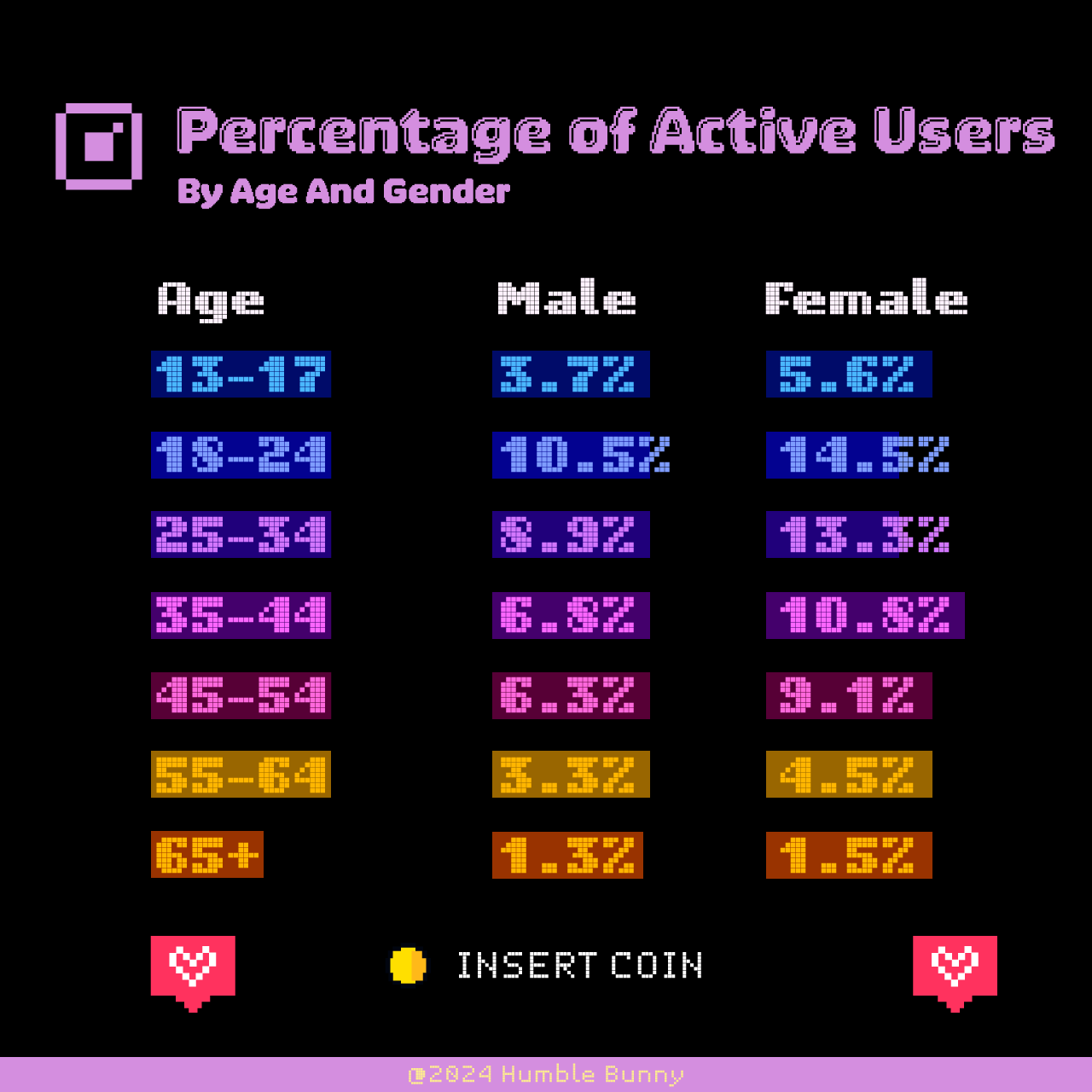
Percentage Within Each Age Group in Japan That Uses Instagram

infographic displaying percentage within each age group in Japan that uses Instagram: 10s 75.0%, 20s 78.0%, 30s 70.5%, 40s 67.0%, 50s 52.7%, 60s 34.7%.

Instagram has a younger user base than Facebook and even X (Twitter) in Japan. It also has a strong following of users interested in fashion, beauty, food and entertainment. As such, it is often seen as the necessary counterpart to Facebook for brands wanting to use the Meta Ads platform to target younger users with paid social media advertising.

Both domestic and international brands are highly active on this channel and have invested an increasing amount of money into influencer marketing (a now flourishing segment of advertising in Japan).

The country’s relatively low population and the fact that celebrities don’t typically have a presence that goes beyond the region mean follower numbers for top Japanese Instagram influencer accounts generally tend to be lower than in other nations.

While Japanese pop culture is incredibly influential in Asia Pacific (Korea, Japan, Indonesia), cultural nuances and references specific to Japan are not readily understood or appreciated by a global audience, affecting the relatability of content.

Similarly, Japanese influencers hold a much stronger sway over their domestic audiences’ opinions and purchasing decisions than international influencers and celebrities.

Top Instagram Trends in Japan
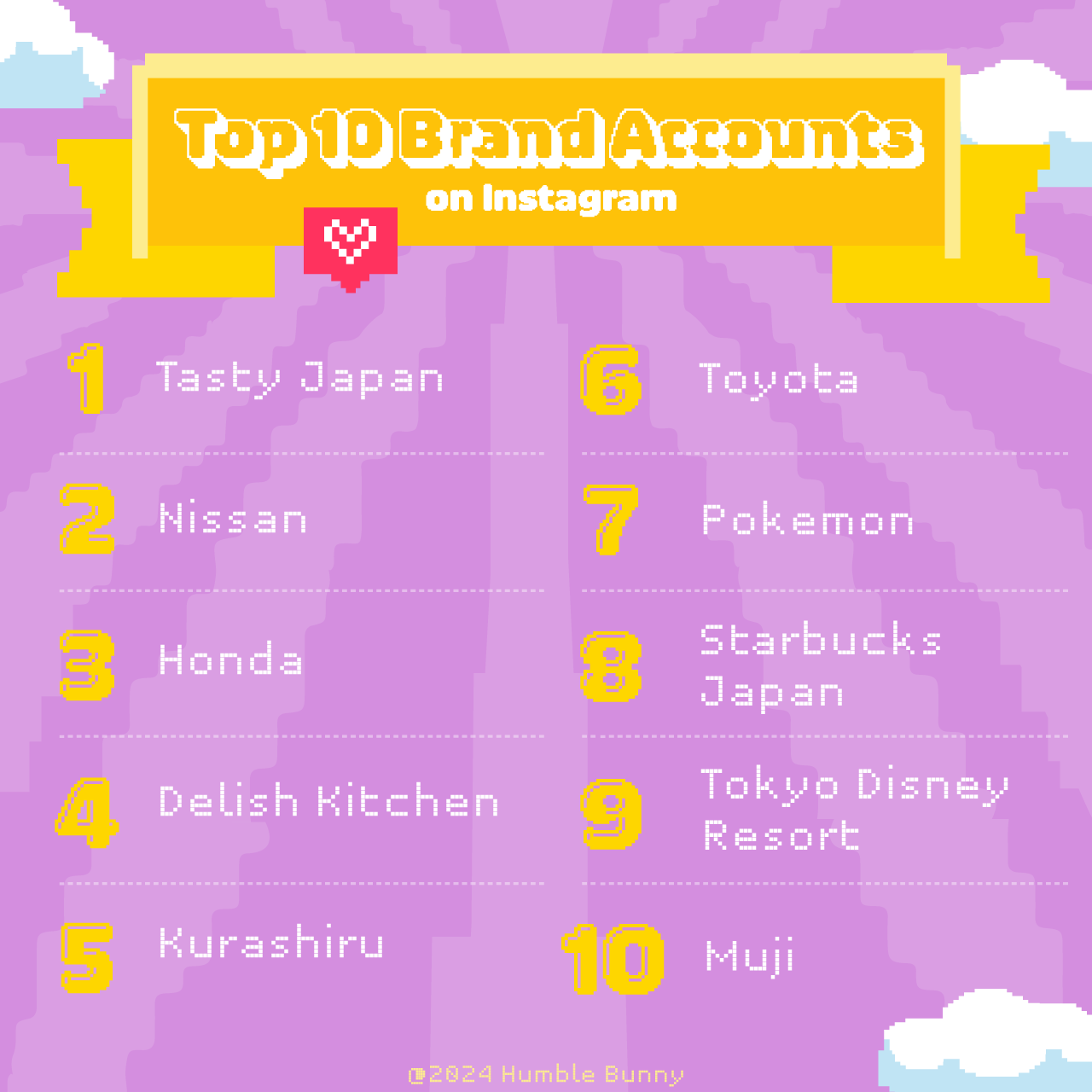
graphic showing the top brand Instagram accounts in Japan: Toyota 10 million, Tasty Japan 7.5 million, Nissan 7.4 million, Honda 6.1 million, Pokémon 6.1 million followers.

Popular influencers, models, celebrities, and niche content creators have been a powerful magnet for users, however, we have seen brand and company accounts among the platforms most followed accounts for many years. This includes the likes of Japan’s most famous car manufacturers, Toyota, Honda and Nissan.

Predictions for Instagram in 2026

A few trends we expect to see on Instagram in Japan this year are:

  • Even in Japan which sometimes seems removed from the world stage, Instagram’s role as a space for advocacy, activism and engagement on global issues is growing. Following conflicts in Europe and the Middle East, combined with the increasing attention on climate change, many use the platform for learning about various social and political issues and being part of the wider conversation.
  • Video content continues to become even more important on Instagram. Specifically, the popularity of reels has skyrocketed thanks to the promotion and prioritisation of them through the platform’s algorithm, as well as the positive reception and escalating engagement from users in Japan.
  • We expect to see even more collaborations between brands and digital creators. From beauty and gaming to tech and food collaborations, the impact of these partnerships is undeniable and most businesses recognise the result they can have on product sales and brand awareness.
  • Japanese users are increasingly treating Instagram like a search engine and not just a place to scroll pretty pictures. Brands and creators who prioritize clear, searchable captions, intentional hashtags, and geo-tags are showing up more often in Explore and map searches.

How Brands Should Use Instagram in Japan

Instagram in Japan functions as a trust checkpoint in the customer journey. Users often visit a brand’s profile after discovering it elsewhere to judge credibility, aesthetic consistency, and social proof before deciding to follow, visit, or buy.

  • Treat your grid like a storefront: Cohesive visuals and lifestyle photography build trust faster than frequent promotional posts.
  • Design for silent viewing: Use text overlays, subtitles, and informative captions — many users browse without sound.
  • Show the real experience: Answer at a glance who it’s for, what it looks like, and what customers can expect.
  • Tie content to seasons and culture: Hanami, festivals, and autumn foliage help users picture your brand in their lives.
  • Use local creators as social proof: Micro and mid-sized Japanese influencers drive trust more than celebrity reach.
  • Enable Shopping: Product tags reduce friction from discovery to purchase, especially in beauty, fashion, food, and lifestyle.

Humble Bunny Case Study: ELLE Japan Instagram SEO Success

We achieved a 7.6% increase in average post engagement rate and a 267% increase in follower acquisition for ELLE Japan by leveraging a strategic Instagram SEO approach.

This involved optimizing relevant hashtags to target the latest lifestyle information sought by ELLE’s audience and establishing a localized Parisian image. Our process began with thorough market research and a deep dive into the client’s story, followed by identifying and selecting relevant Instagram SEO clusters and hashtags.

Part of the Instagram SEO strategy report

Our unique insight led us to develop engagement metrics that prioritize hashtags, balancing brand-specific and market-relevant tags to enhance awareness. This approach involved crafting posts that resonate with our target audience by blending descriptive, high and low-volume, and community hashtags, resulting in significant growth in followers and engagement.

ELLE Japan – A Custom Social Engagement Strategy and Instagram SEO – Read the full case study

TikTok

Overview

  • TikTok growth in Japan is surging: The platform has grown 56% from 2023–2026, cementing its role as a core social network.
  • Video-first, bite-sized content wins: Short, high-impact videos (15–60 seconds) align perfectly with Japan’s fast-paced, mobile-first, limited-free-time lifestyle.
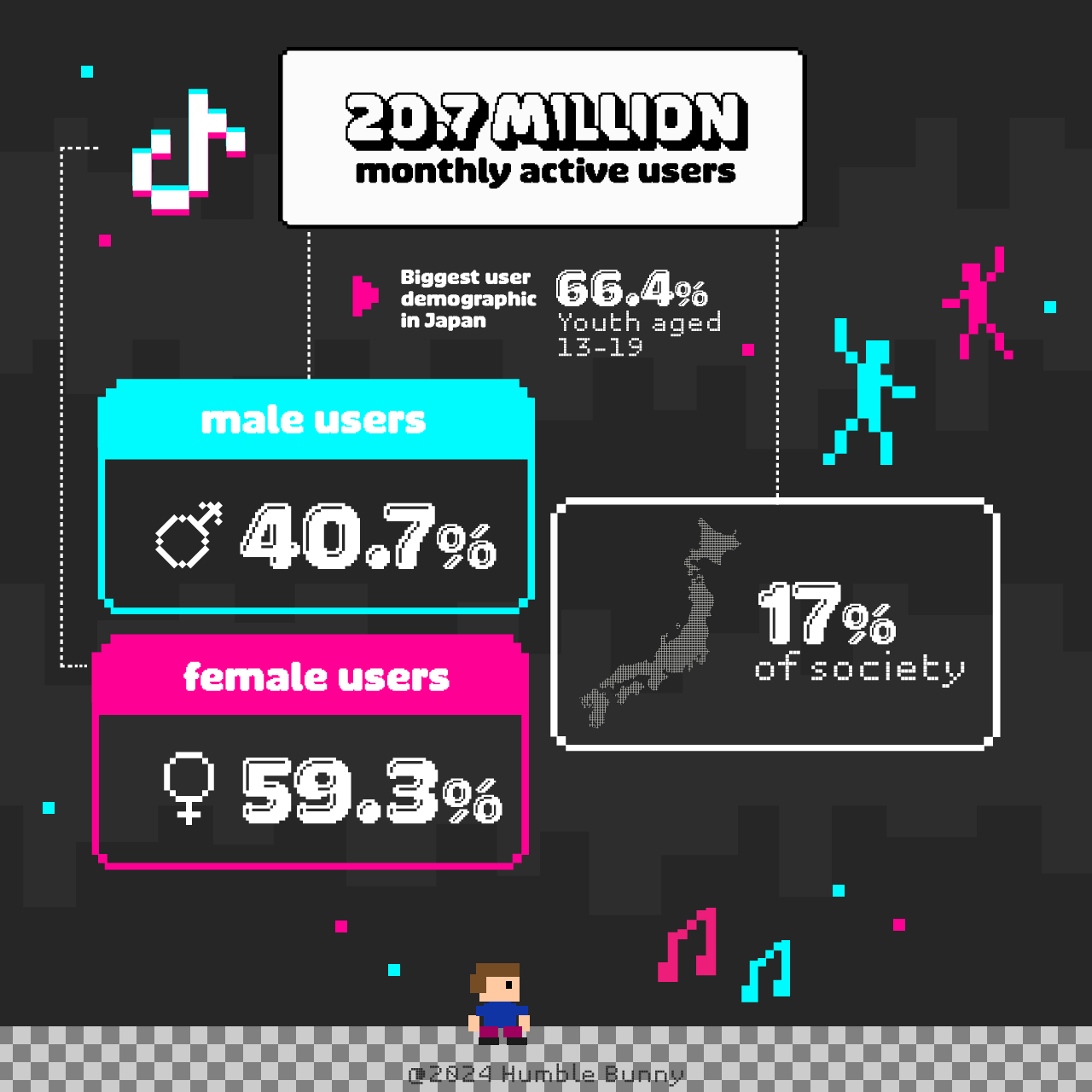
  • Gen Z leads, but older users are catching up: Usage is strongest among 13–19-year-olds (75.8%), with steady adoption across 20s–40s, signalling long-term platform stability.
  • TikTok is Japan’s go-to social discovery platform: Users engage lightly, scroll quickly, and discover trends, products, and creators without needing deep context or commitment.
  • Localization drives relevance: Region specific trends, music, and cultural nuances help TikTok feel familiar and community-driven.
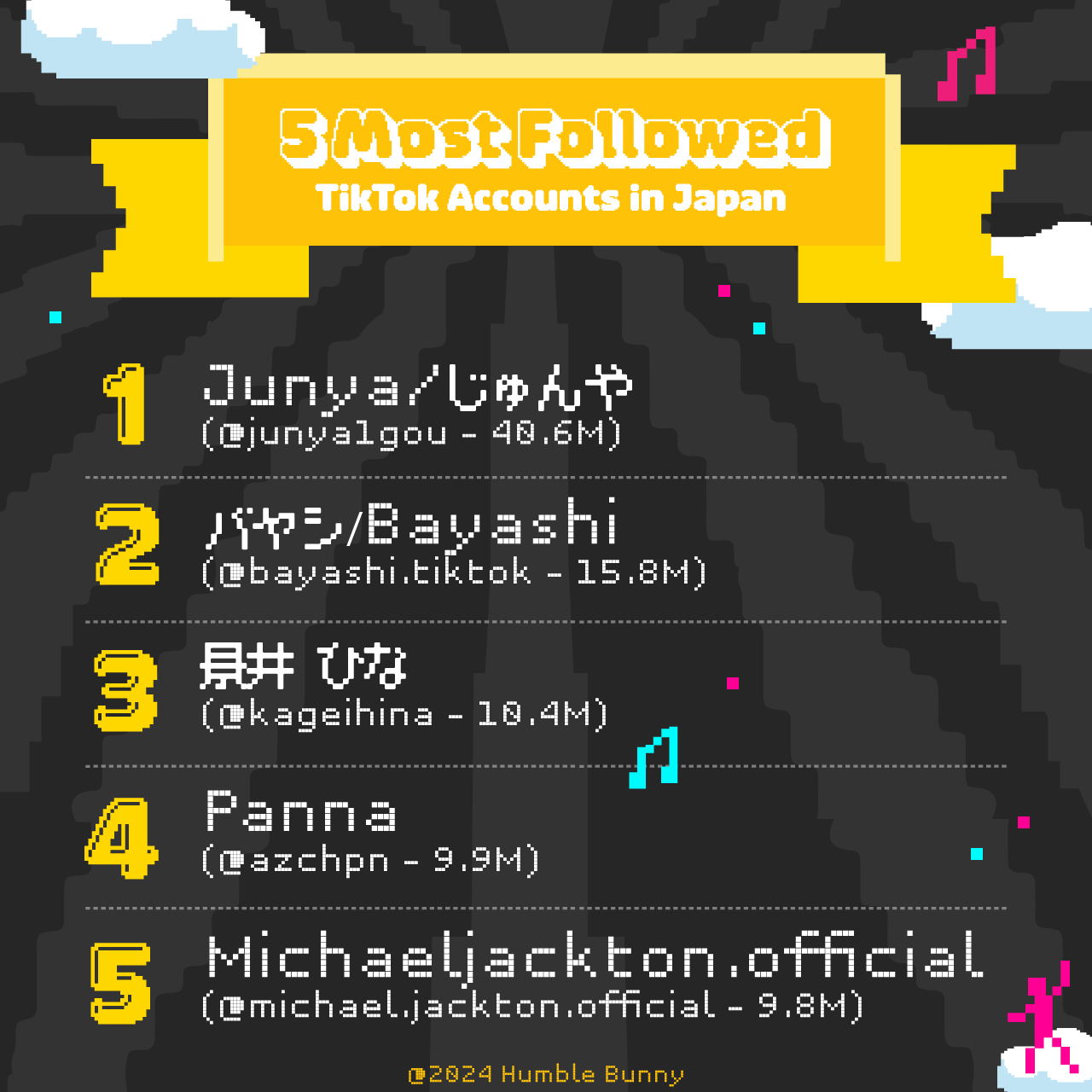
  • Creators shape culture: Japan’s top TikTok influencers command massive reach, making creator partnerships one of the fastest ways to build awareness and trust.
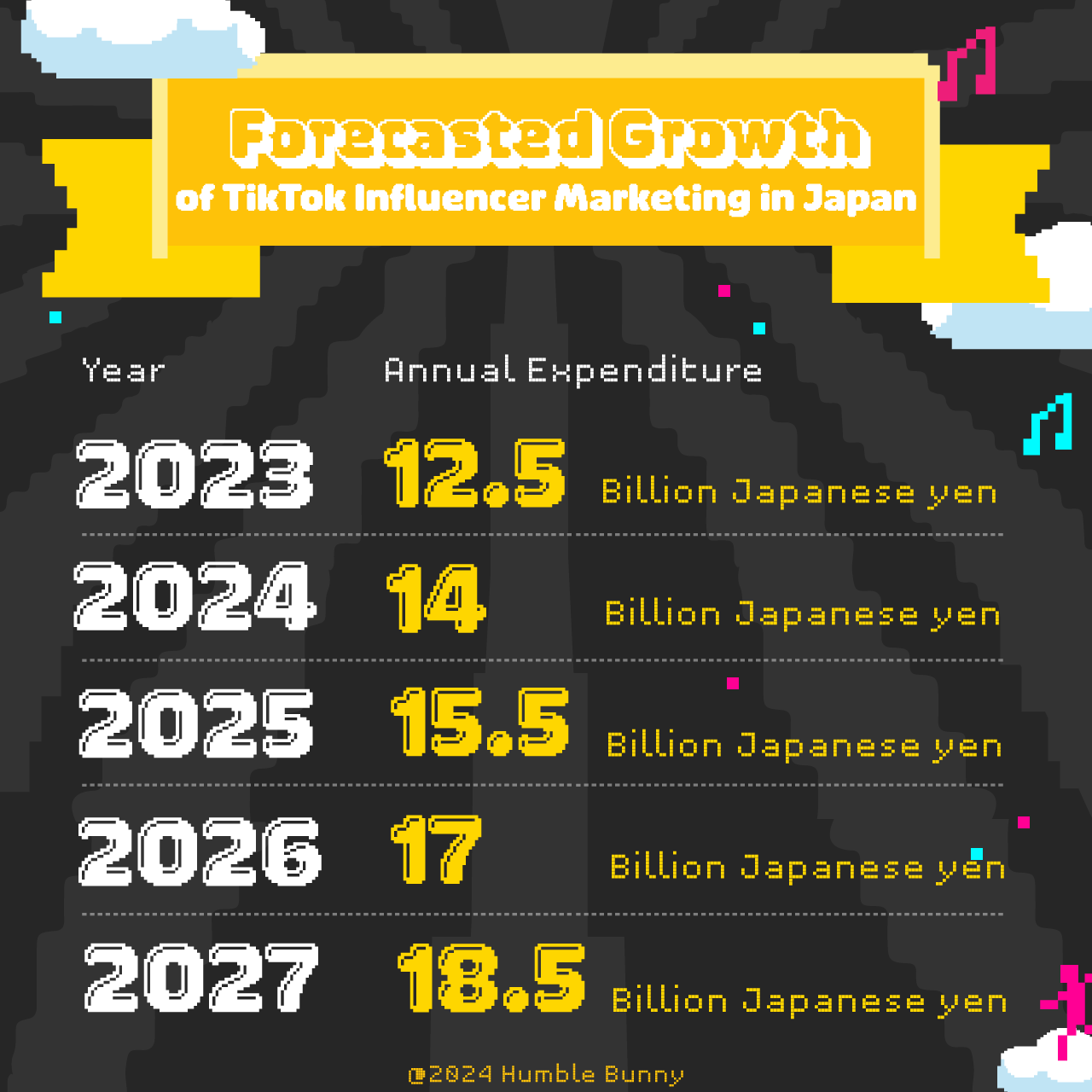
  • Influencer marketing spend is accelerating: Projected growth from ¥24.6B (2024) to ¥40.7B (2026) highlights TikTok’s rising commercial impact.
  • Best used for top-of-funnel impact: TikTok boosts awareness, discovery, and branded search demand rather than driving direct conversions alone.
pixel-style infographic showing TikTok monthly active users at 42 million users in Japan, with Male: 55%, Female: 45%, and 33% of society using the platform.

Tiktok has grown by about 56% from 2023 to 2026.

A trend-orientated, video-first platform based around videos of 15-second intervals, maxing out at a total of 60 seconds, TikTok is a crystallisation of a long-term trend—people demanding more user generated video content. In a nation of limited free time and short attention spans, and where bite-sized media space segmentation is widespread, the direct and high-impact nature of TikTok has fueled its success. A few more reasons why TikTok has been so popular in Japan are:

  • The ability to access content without going too “deep” into topics or themes as other social platforms do, such as X (Twitter). This is appealing for many younger users who want to engage in social media use in a more lighthearted and exciting way.
  • Short videos are easier and quicker to consume than lengthy text-based content. Users can quickly scroll through multiple videos in a short amount of time, allowing for a diverse and dynamic viewing experience while travelling or on short breaks.
  • TikTok actively localizes its content to suit the preferences and cultural nuances of its users. By featuring region-specific trends, challenges, and music, it creates a sense of belonging and cultural relevance—fostering a deeper connection with the platform.
  • The platform’s appeal to younger generations, coupled with the rise of influencers and content creators on TikTok, has led to the formation of a vibrant creator community. Influencers often set trends, shaping popular culture and driving engagement among young audiences.

Convert Using TikTok Ads in Japan – A Crash Course

TikTok Demographics
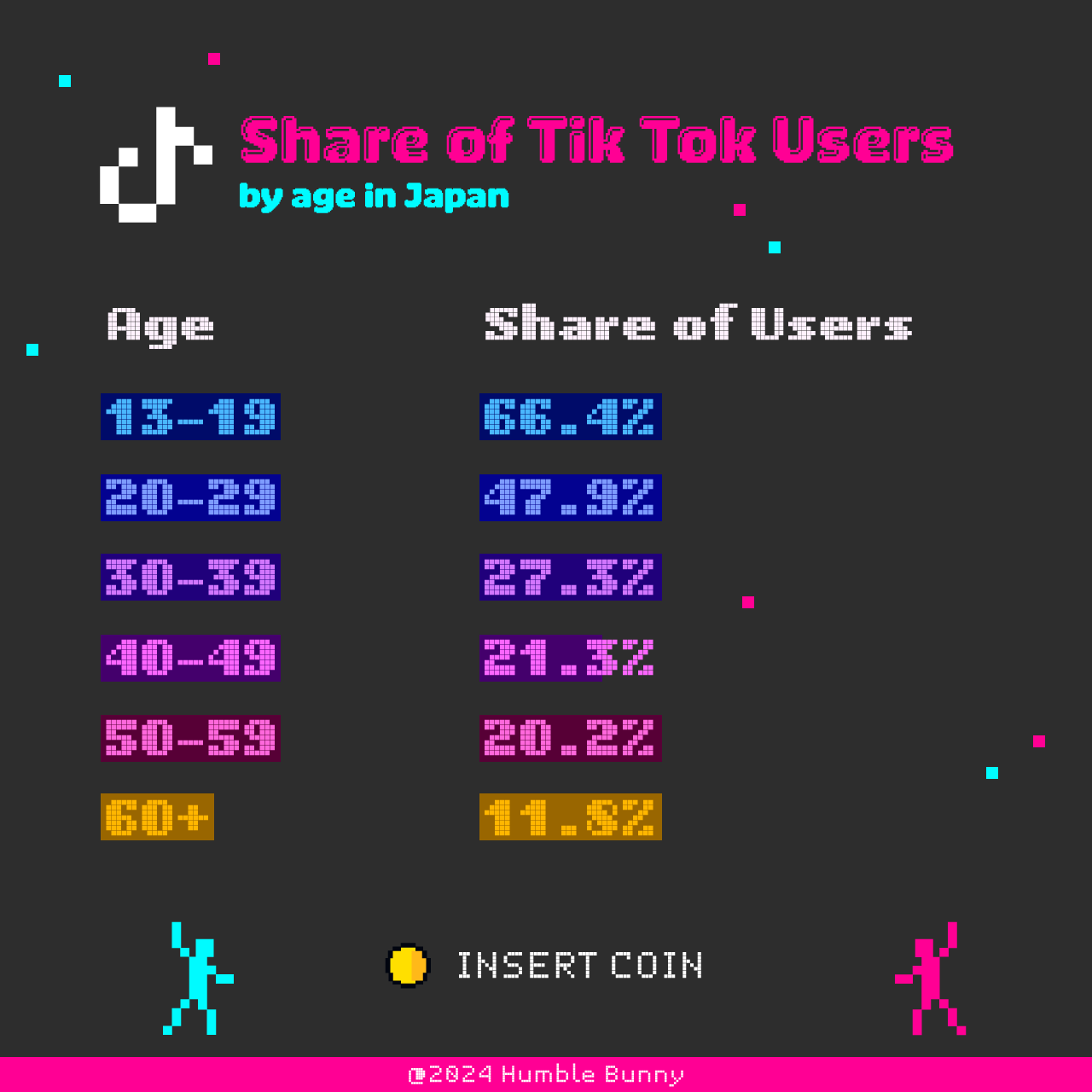
Percentage Within Each Age Group in Japan That Uses TikTok

percentage within each age group in Japan that uses TikTok: 13–19 75.8%, 20s 69.8%, 30s 57.4%, 40s 51.7%, 50s 41.6%, 60s 35.8%, 70+ 21.0%.

TikTok has solidified its position as the go-to platform for Japan’s Gen Z, with its usage among 13 to 19-year-olds skyrocketing by 1.2 times compared to last year, reaching an impressive 70%.

Many brands are concerned that it can be incredibly difficult to produce the kind of content that does well on this platform. However, for brands that have succeeded in partnering with digital creators, a huge amount of interest can be built among Japan’s youngest demographic of SNS users.

Top TikTok Data and Trends in Japan

visual graph of forecasted growth of TikTok influencer marketing in Japan: 2024 ¥24.6B, 2025 ¥32.1B, 2026 ¥40.7B, 2027 ¥47.8B.
5 most followed TikTok accounts in Japan: Bayashi with 55.6 million followers, Junya with 44.3 million, Wes-P with 13.7 million, Saito with 13.4 million, and Michael Jackton with 12.9 million.

Predictions for tiktok in 2026

With the platform’s continued success and the prominence of TikTok-style trends making their way onto platforms like Instagram, we’ve seen a gradual migration of older users venturing into TikTok territory to see what all the fuss is about. This is likely to continue as more people get over their initial hesitancy and embrace its appeal.

For marketers, the challenge has been to adapt processes and content to match the unique style of TikTok. It is now widely recognised that the most effective content on this channel is user generated and brands must be strategic in their partnerships with digital creators.

Although paid ads are notoriously harder to set up here than on platforms like Meta Ads, partnerships with popular individuals already catering to huge audiences is a great way to create engagement quicker than any other platform, especially if your product and/or content serves the needs of a younger audience.

How brands should use TikTok in Japan

  • Create videos that look native and creator-style, not like polished ads.
  • Design for silent viewing with strong text overlays and captions (many users watch during commutes without sound).
  • Partner with Japanese TikTok creators and give them creative freedom.
  • Use captions and on-screen text to include brand and product keywords for discoverability across TikTok and search.
  • Act quickly on Japanese trends, sounds, and hashtags — speed beats perfection.
  • Focus on storytelling, humour, and everyday relatability rather than direct selling.
  • Engage actively in the comments in Japanese to humanise the brand.

Humble Bunny’s Pro Tip

Use TikTok’s ad formats, such as In-Feed Ads and TopView Ads, to grab attention instantly and drive traffic to your landing pages.

How Japanese People Use Social Media in 2026 Summary

Social media in Japan is not just about which platforms are most popular — it’s about how and why people use each one. From private messaging on LINE to long-form video discovery on YouTube and trend-driven content on TikTok, Japanese users move between platforms based on their needs, moods, and daily routines. Understanding these usage patterns is key for brands and marketers who want to connect with Japanese audiences in an authentic and effective way.

PlatformPrimary Role in JapanHow People Actually Use ItWhat It’s Best For
LINEPrivate communication & daily lifeMessaging friends, family, coworkers, school groups, receiving business and government updates, making payments and bookings.Customer support, loyalty programs, direct communication, official updates.
YouTubeLearning, entertainment & trustWatching long-form videos, tutorials, product reviews, gaming, commentary, and creator content.Brand storytelling, education, product explanations, and purchase influence.
X (Twitter)Real-time news & anonymous expressionFollowing breaking news, fandoms, pop culture, and sharing opinions or emotions under pseudonyms.Trend engagement, community building, live updates.
InstagramIdentity & lifestyle curationPosting fashion, food, travel, daily moments, following influencers, and visual storytelling.Visual branding and influencer marketing.
TikTokTrends & entertainmentWatching and creating short-form videos, following viral trends, music, humor, and youth culture.Brand discovery, trend-based marketing, Gen Z engagement.

Other SNS Platforms in Japan

A few less popular SNS channels that we believe are still worth a mention are below.

ThreadsSince its initial peak in summer 2023, the global popularity of the X (Twitter) alternative, Threads, has declined. And the picture is very much the same in Japan. Although it has around 7 million users (5% of total users worldwide), most critics believe it hasn’t gained enough critical mass to have long-term success in the Japanese market—which often requires apps and services from abroad to gather higher levels of early stage growth momentum to secure long-term success (or risk becoming another Facebook).
LinkedInLinkedIn simply isn’t home to anywhere near the volume of potential contacts, networks and businesses as you’d find in other markets for this SNS channel. Some attribute this to cultural factors such as Japanese professionals being less inclined to showcase all their achievements and career milestones so openly (perhaps considered “showing off”) or the preference for traditional face-to-face relationship building. .
AmebaAmeba is a micro-blogging site, similar to platforms like WordPress but with a few quirky twists, such as customisable avatars that allow users to socialise with other users in digital environments. Although it has a loyal base of users, X (Twitter) is Japan’s number 1 space for micro-blogging.
PinterestPinterest is used in Japan by a small but strong base of designers, artists, and people looking for creative inspiration.
pixivThis platform caters to creatives, particularly illustrators and artists. With over 50 million registered users globally, pixiv is a hub for art enthusiasts and professionals alike. It’s ideal for brands in the creative industries looking to collaborate with talented artists or advertise products tailored to artistic communities.
BeRealBeReal has gained traction in Japan, particularly among younger users who value authenticity. Unlike other platforms, it encourages spontaneous, unfiltered snapshots, resonating with Gen Z’s preference for genuine content. While it remains niche, its appeal to users seeking a more “real” social media experience makes it an interesting platform for brands targeting this demographic.
RealityReality is a popular live-streaming app in Japan that combines VTuber culture with social streaming. It allows users to interact with virtual idols and participate in live events, focusing on user-generated content. Especially popular among younger audiences, the app provides brands with opportunities to collaborate with virtual personalities and engage users through interactive experiences.
TwitCastingA live-streaming platform popular among younger audiences, TwitCasting allows real-time interaction. Its strong user base among teenagers and early 20-somethings makes it ideal for brands targeting Gen Z through live content.
Mixi 2Mixi was one of Japan’s earliest homegrown social networks in the 2000s and still exists as a community-oriented service, especially for niche interest groups and hobby communities. It doesn’t compete with global giants in terms of active users anymore, but it remains part of Japan’s social ecosystem and can be relevant for deeply targeted, interest-based communities.
Note (ノート)A Japanese long-form publishing platform used by writers, entrepreneurs, and creators to share essays, expertise, and personal stories. Unlike fast-paced social networks, note is built for thoughtful content and often includes paid articles and memberships, making it a key space for trust-based creator and brand communication in Japan.

Humble Bunny Social Media Case Studies List

At Humble Bunny, our approach to social media in Japan is rooted in localization, platform fluency, and real user behavior, not one-size-fits-all playbooks. The case studies below show how tailored strategies translate into measurable outcomes:

  • Etro Japan Digital Advertising (PPC)
  • LOCALIZED SOCIAL MEDIA STRATEGY FOR DAILYFX JAPAN
  • ELLE Japan – A Custom Social Engagement Strategy and Instagram SEO
  • 6.3 ROAS from Meta Ads: French Language School’s Success Story

Key Insights

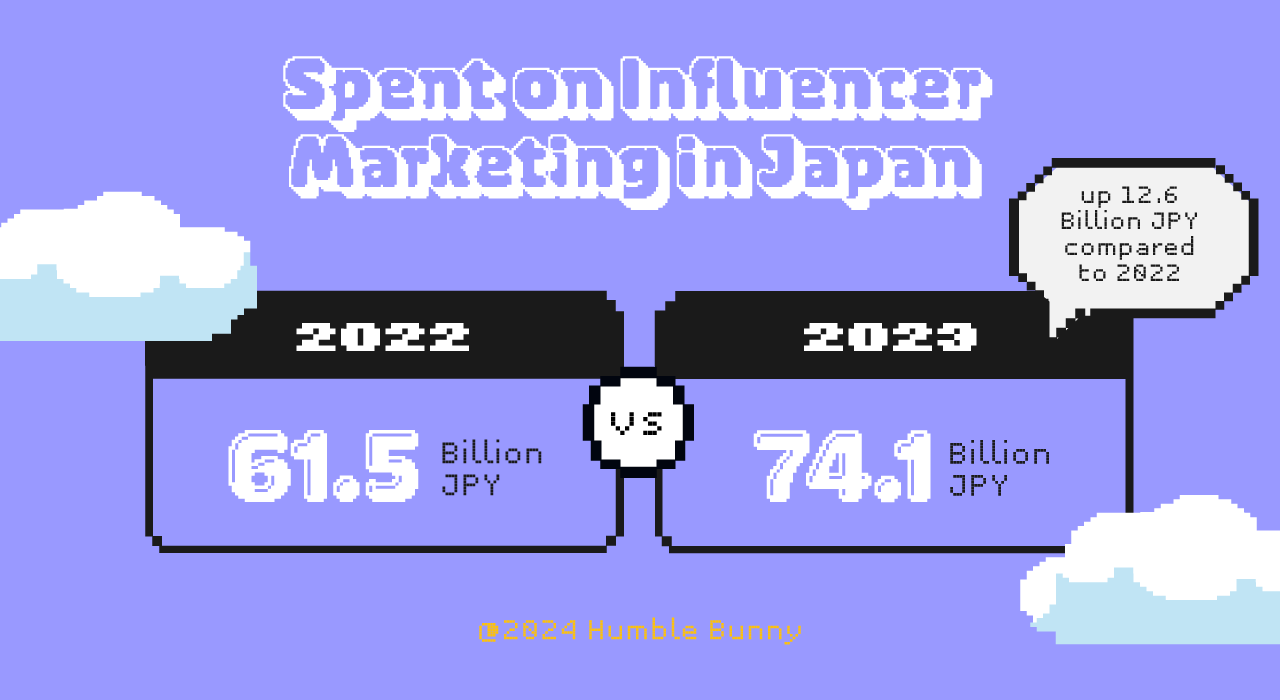
retro-style chart showing money spent on influencer marketing in Japan, ¥86 billion estimate in 2025 rising to 164.5 billion yen in 2029 prediction.
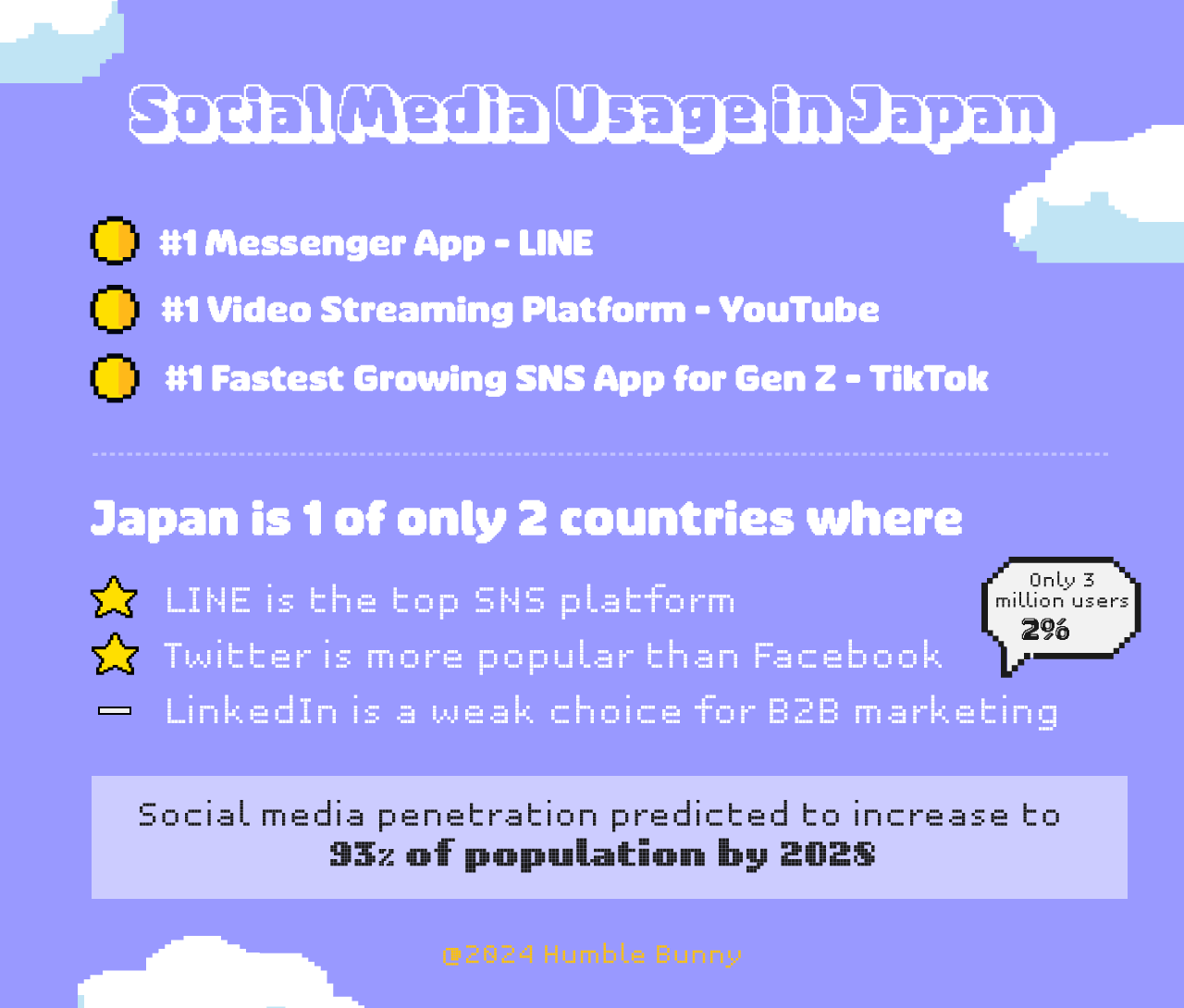
chart showing social media usage in Japan where number one app is Line, number one video streaming platform is Youtube, Twitter is more popular than Facebook

Japanese culture places a strong emphasis on privacy and personal space. This cultural value often translates into a more reserved online presence, with users being cautious about revealing personal information, engaging with strangers, or sharing their opinions publicly.

This tendency can lead to lower engagement in terms of liking, sharing, and commenting on content, especially if it involves people outside their immediate social circle.

Ultimately, communication with others is a primary reason for using social media for many who may be less inclined to use online channels for interacting directly with brands or influencers.

Japanese users often prefer private messaging platforms like LINE, where interactions are more intimate and personalized. It is likely that this preference for one-on-one or small group conversations has also led to comparatively lower engagement in more public spaces like Facebook, Instagram or X (Twitter), where posts are visible to a larger audience.

Japanese users often prefer private messaging platforms like LINE, where interactions are more intimate and personalized.

Interaction with Brands on Social Media
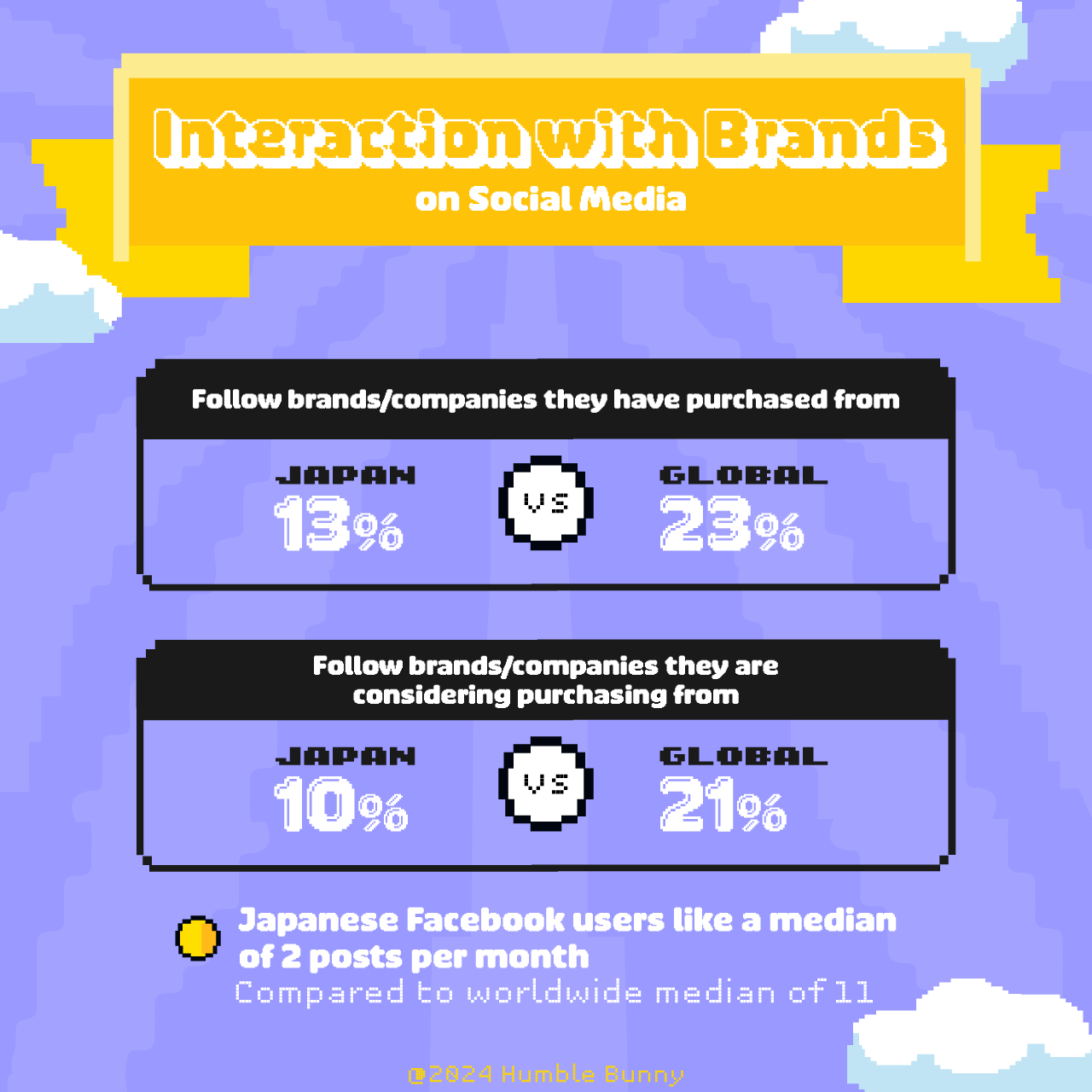
user interaction with brands on social media before purchase: Japan 30% vs global 46.1%

Japanese users tend to prioritize interactions within their existing social networks, leading to fewer engagements with accounts that are not directly related to their immediate circle. As such, they might be more selective about following large numbers of accounts, preferring quality over quantity in their online connections.

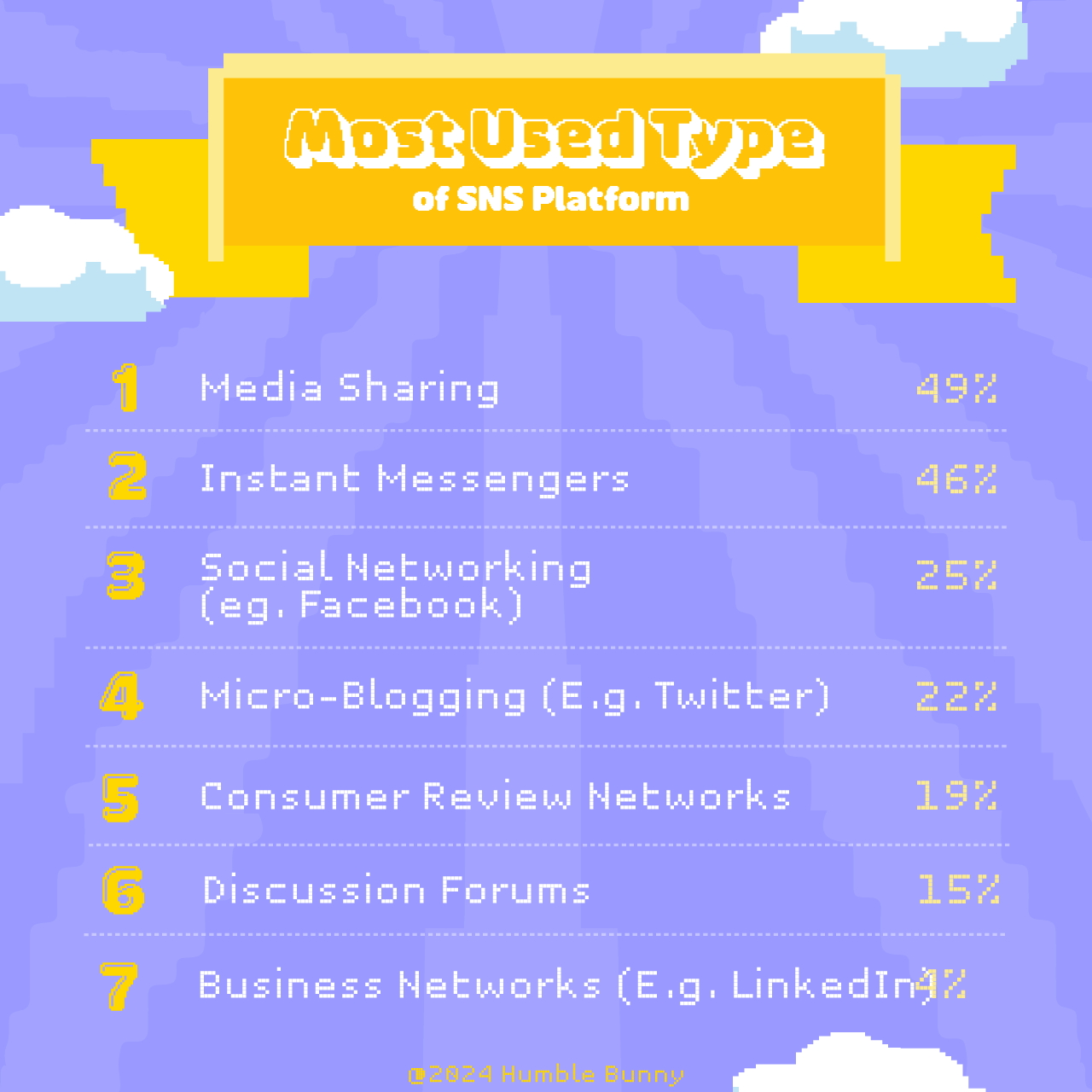
Most Used Type of SNS(SOCIAL MEDIA) Platform

infographic of most used type of SNS platform: media sharing 50%, instant messengers 46%, social networking (e.g. Facebook) 25%

Most Common Reasons for Using Social Media in Japan
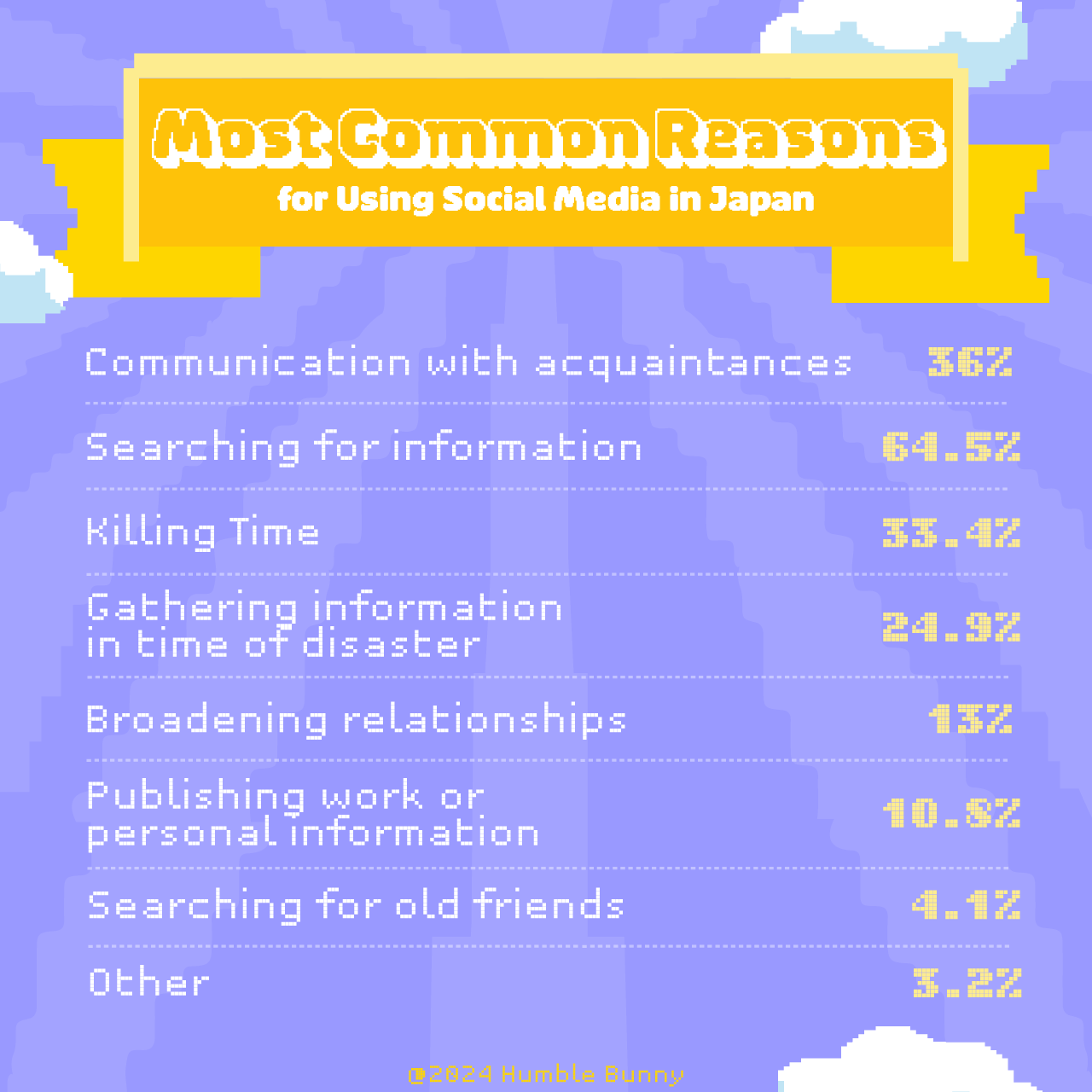
infographic showing the most common reasons for using social media in Japan, led by communication with acquaintances (87.2%), searching for information (63.4%), and killing time (33%).

Japanese Social Media Trends in 2026

While not all specific to Japan, below are some key trends taking place in the Japanese SNS landscape in 2026.

NICHE DIGITAL CREATORS ARE MORE IMPORTANT

Digital creators are thriving. By tailoring their content to specific niches and communities and addressing the unique interests and needs of audiences, they foster engaged communities centered around particular topics, hobbies, or identities. What sets digital creators apart is their ability to share genuine, relatable experiences. It’s also common for individuals with modest followings to have the most engaged audiences, connecting authentically by divulging personal challenges, skills, and expertise, which cultivate higher levels of trust than traditional media figures and even larger social media influencer profiles.

JAPANESE SNS REMAINS A PRIMARY SOURCE FOR NEWS

With the country’s strong distrust of organizations, it’s not that surprising that many people look to social media for their news and insights into world affairs. While mainstream broadcasting is still popular in Japan, social media and online communities are often the place people go for immediate answers on the latest news. The challenge for the user is learning how to best navigate misinformation and contrasting views amidst highly political and volatile topics, such as conflicts in Europe and the Middle East.

A PLACE TO VOICE CRITICISM AND CONCERN

Japan continues to use social media as a safe space for voicing criticism about the government’s handling of various issues or global political concerns. Digital platforms are now a common substitute to protests and public gatherings in a nation where preference for anonymity is high.

SEARCH BEHAVIOR IS SHIFTING FROM GOOGLE TO SNS

Younger Japanese users are now using platforms like Instagram, TikTok, and YouTube as search engines. Whether looking for restaurant reviews, travel ideas, product recommendations, or how-to guides, SNS platforms are becoming discovery tools. Hashtags, captions, and on-screen text are now critical for discoverability, not just aesthetics. This has major implications for SEO and social strategy, as social posts now need to be optimized for search intent in addition to engagement.

CAPTION-HEAVY, TEXT-OVERLAY CONTENT MATCHES JAPANESE CONSUMPTION HABITS

A distinct behavior in Japan is consuming SNS content without sound, often while commuting or in public spaces. As a result, videos and posts that rely heavily on text overlays, subtitles, and detailed captions perform significantly better. Brands that design content assuming the sound is off see higher watch times and better retention.

SHORT-FORM VIDEO IS NOW THE DEFAULT CONTENT FORMAT

Short-form vertical video has solidified itself as the dominant content format across Japanese SNS platforms. What began as a trend driven by TikTok and Instagram Reels has now influenced how content is created across X, YouTube, and even LINE VOOM. Japanese users increasingly prefer fast, visually engaging, caption-heavy videos that can be consumed passively without sound. For brands, this means static image posts are no longer enough to compete for attention. Even informational, educational, or corporate content is now being adapted into short-form video formats to remain visible in algorithmic feeds.

SOCIAL MEDIA AS A FORM OF CUSTOMERS SERVICE

Brands operating in Japan are increasingly leveraging social media messaging apps as a customer service tool due to their accessibility, immediacy, and convenience. Apps like LINE enable real-time, two-way communication between customers and brands.

MORE LOCALIZATION

We’ve seen through Humble Bunny’s own client base that businesses are now more open (and eager) to invest in localization when it comes to their social media activities in Japan. And we’ve seen first hand how powerful it can be to leverage local research before producing content.

For instance, our development of custom brand guidelines for DailyFX in Japan supported our ability to increase their Instagram followers by 30% MoM as well as increase their engagement rate by 16.3% MoM. Among other things, we did this by implementing a more casual and colorful design approach that was more suited to Japanese audiences.

Learn More About Our Work with DailyFX

INFLUENCERS SHAPE CULTURAL NORMS AND SOCIAL TRENDS

Influencers and high profile individuals continue to play a key role in both disseminating information and opinions relating to news and updates that affect their communities. Building on their increased authority and reputation since the pandemic, many influencers are considered highly trustworthy who have the power to shape cultural norms and social trends. In line with this, influencer marketing continues to thrive.

MORE CAMPAIGNS FOR OLDER DEMOGRAPHICS

With Japan’s ageing, and shrinking population, combined with the fact that disposable income is the highest among older groups, dedicated campaigns for people over 45 continue to become more prominent. With greater numbers of older users now frequenting platforms like X (Twitter) and Facebook, we are seeing more brands produce campaigns that specifically target their interests and preferences.

Learn More About Japanese Consumers

Ready to elevate your social media strategy in Japan? Contact us at Humble Bunny to craft strategies that deliver real results. Explore our Social Media Case Studies below to see how we’ve successfully applied these strategies in action!

Get a Localized Social Media Strategy for Your Business With Humble Bunny

WHY US?

We have been in the market since 2009, and over 95% of our contracts get extended, average commissioning us for about 3 contracts. With our team of bilingual digital marketers, who go beyond being tool savvy and knowing the latest trends, but go in the mud analyzing at least 6 data points for each project, using it to come up with strategy, and adjusting the pillars of strategy to excel.

4 THINGS TO KNOW ABOUT HUMBLE BUNNY BEFORE PARTNERING WITH US

What is our principle and our secret? Have a look at the video below to learn more about us. As a brand-centric digital marketing agency, we know how to strike the best balance between the performance and the brand.

Japanese SNS FAQs

smiling woman holding a phone on a selfie stick, waving as she pose for a photo in a bright modern living room.

WHAT DO JAPANESE USE FOR SOCIAL MEDIA?

Here are the #1 media platforms used by social type:

  • Media Sharing: Youtube
  • Traditional Social (posting, commenting, interaction, etc.): X (Formerly Twitter)
  • Messaging: LINE (Facebook Messenger, WhatsApp, and WeChat are not common in Japan)
  • Short form: TikTok (Though Instagram and Youtube options are popular and growing in Japan)

WHAT IS SNS IN JAPAN?

SNS is similar to what you see overseas–but the platforms used are different. There’s also a mix of media sharing (Youtube), chat apps (LINE), and traditional social (X, Instagram, Facebook, Etc.) in this market. SNS’ role in Japan is much the same. It’s a place for conversations, sharing, and interaction to happen. Of course its nuances and how the platforms are utilized is subtly different. This is where a strategy becomes importatn

DO I NEED TO WORK WITH A LOCAL SOCIAL MEDIA AGENCY?

It’s possible to advertise in Japan through an agency in your home market, however, results may be more relevant, timely, and natural by utilizing an agency (and its in-country Japanese team) in Japan. There are lots of brands working remote, but the qualified feedback of Japanese people is that they often lack the touch (and sometimes trust suffers). Local teams also tend to have a better finger on the pulse for trends, booming social and cultural trends. This is because they are engaging with media from morning to night, constantly. Finally, since the whole team is on the ground experiencing Japan from morning to night, creativity and ideation sessions tend to be more relevant.

HOW DO I ACHIEVE ENGAGEMENT ON JAPANESE SNS

When you take the time to really understand the kind of content users enjoy consuming on each individual SNS platform here, engagement can be incredible. Most platforms are now heavily saturated with high volumes of paid or sponsored ads, but if your content is good (creative, original, appropriate for your audience), social ads can still be your most important tool for growing interest in your brand in the way you’d always dreamed.

HOW EXPENSIVE IS IT TO ADVERTISE ON JAPANESE SNS?

Marketing and SM managers should understand that realistic budgets need to be set to generate enough conversion velocity if you want to see results. You are at least looking at a likely 10-15% increase on ad spend based on our experience.

DOES JAPANESE SOCIAL PPC WORK?

While it always depends on your specific product and goals, marketing on social media is still an important component for foreign brands entering the Japanese market and does work for companies who commit to the process. For instance, ecommerce success can involve a good level of initial brand building to support later stages of the customer journey such as retargeting and Google Shopping and Search Ads.

DO I NEED TO ADAPT MY SNS STRATEGY FOR JAPAN?

It’s still shocking how many foreign brands use the same approach to social media marketing here that they do for their other markets, despite knowing that the interests and behaviors of people are unique enough here to warrant fresh thinking and new social media strategies for any brand. As long as you commit to this process, success is achievable.

About this article

This article is maintained by the digital marketing team at Humble Bunny, a Tokyo-based full-service marketing agency supporting both international and domestic brands entering and growing in the Japanese market.

Humble Bunny’s team works across SEO, social media marketing, content strategy, paid advertising, web design, branding, and inbound marketing — giving this guide practical insight drawn from real client campaigns and hands-on experience navigating Japan’s digital landscape.

Over time, this guide has been contributed to and updated by multiple team members actively managing marketing projects for clients in Japan, ensuring the information reflects current platform trends, user behavior, and industry best practices.

Contributors to this article include:

  • Past and present members of the Humble Bunny content, SEO, and marketing strategy team
  • Social media strategists and digital marketers working directly with clients in Japan
  • SEO specialists maintaining accuracy with current platform and search trends

Most recent update by:

Wai Yan Yau — SEO Specialist & Digital Marketer, Humble Bunny (2026 update)

Methodology

This report combines platform usage data, industry research, and Humble Bunny’s on-the-ground experience managing social media campaigns for brands in Japan.

There have been some key changes made to the published advertising reach figures of individual platforms in recent months, making it difficult for us to offer reliable year-on-year statistics for social media users in Japan compared to our last report.

Nevertheless, we have substituted certain data points with the most recent information available from publicly accessible surveys, official company records, and government datasets. And where numbers alone have not been enough to paint a full picture of Japan’s most important social media trends, we’ve added our own understanding of the local context gathered from extensive social media marketing activities on behalf of our clients.

SOURCES

  • Datareportal
  • World Bank Group
  • Statistics Bureau of Japan
  • Social Media Curve
  • Meltwater
  • at home
  • Dentsu-ho
  • Mobile Society Research Institute
  • Lycbiz
  • GROVE
  • Information and Communications in Japan
  • Impress Watch
  • PR TIMES
  • notta
  • TikTok
  • Comnico
  • Thunderbit
  • NapoleonCat
  • Nippon

Steal Our Best Ideas

Actionable insights straight from our data

Here are a couple quick discoveries we’ve pulled from the data of our latest projects. Why? To help you make the changes you need to gain traction in the Japanese market! As an agency, we are always digging deeper and searching for those little yet significant tweaks that will push our clients to the next level of success. If you need a partner to help you identify and implement changes like these on a monthly basis, let us know!
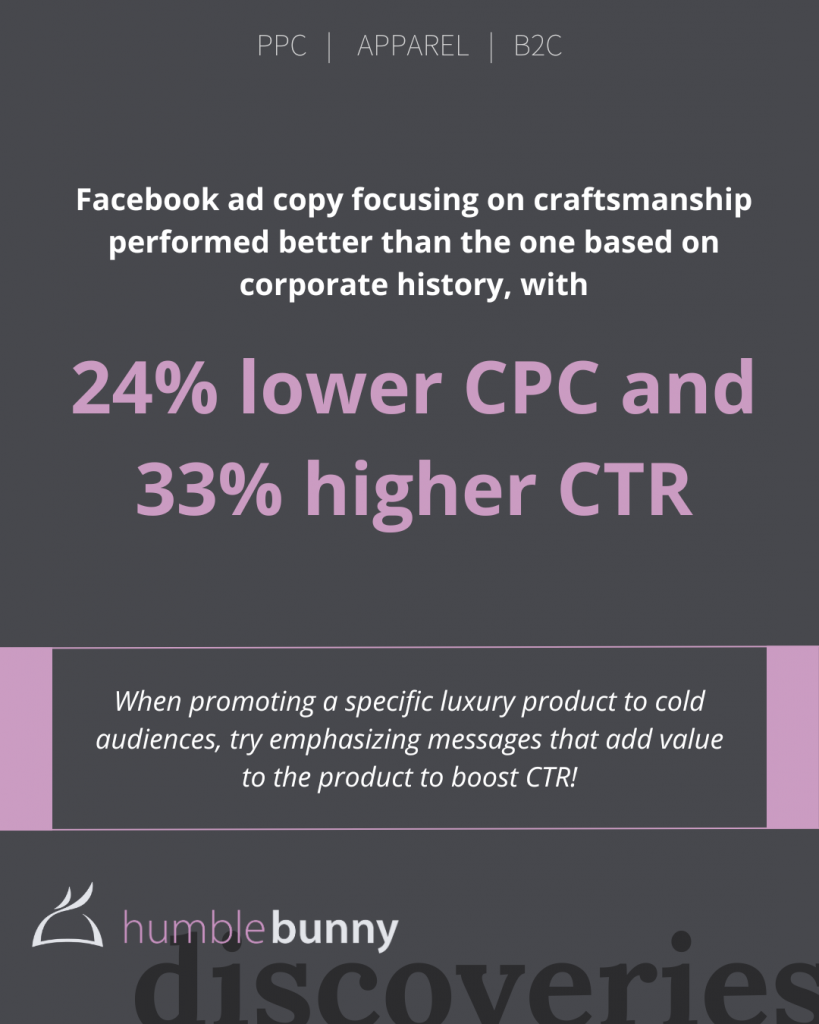
Facebook ad copy focusing on craftsmanship had 24% lower CPC and 33% higher CTR than ones focusing on corporate history Discovery card
By executing an aggressive keyword campaign with a super sale promotion on Rakuten traffic surged 207% Discover card
Including a CTA in the first half of our articled increased downloads by 111% Discovery card
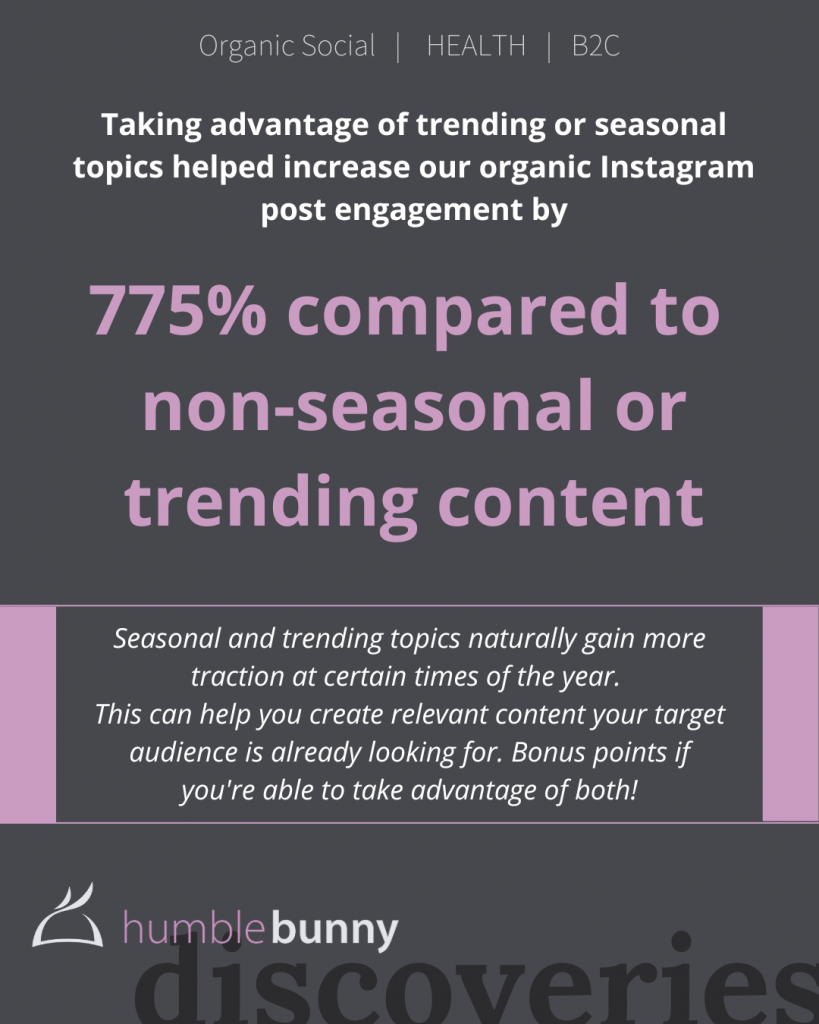
Taking advantage of season and trending content increased engagement by 775% on Instagram Discovery card

Let’s connect!

It’s easy to contact us.
Use the short form just below or shoot us an email!

Articles we think you would like

The Best AI Japanese Translation Tools—Tested and Ranked!

Business owner using AI writing tools in Japanese

AI Writing Tools in Japanese – Do They Work?

Search and extract more of our deep Japan marketing secrets

…we’ve also pre-built some themed pages to inspire you!

Organic social media
Web design
SEO
Ecommerce

Real Words from Real Clients

google

Good people, great digital design & development services. We have worked with HB on multiple projects, and highly recommend them for thoughtful, on-time, professional design, project management and web development.

Maikai Digital
Maikai Digital
google

Humble Bunny, I have multiple companies that I operate in the United States and Japan. I was in need of a service that regarded a concert flier and program design. Humble Bunny and the entire team got to work quickly, and proposed a firm plan. They also, outlined a visual layout with copies of each description for my records making our relations professional. I know this company is committed to provide the best for its clientele. I`m now working with Humble Bunny on my second project. Best wishes to the entire staff and all the best towards the future. - Mikaele Productions Sept. 2016

Mikaele Production
Mikaele Production
google

I've worked with Humble Bunny several times, as a photographer. They handle large projects confidently, and came to the shoots with many creative ideas and direction for their Clients. They worked closely with me to ensure amazing results. If you're looking for a creative agency that can really pay attention to your needs as a client and create a bespoke solution for your digital marketing, then look no further.

Benjamin Parks
Benjamin Parks
google

We collaborated with Humble Bunny to launch our innovative camping tent to the Japanese market and we couldn't be happier with them. To our project they added a level of professionalism, inventiveness, drive and good naturedness that we've not found with many other outfits. If you're looking for a comprehensive, friendly and creative avenue for end-to-end market entry then look no further.

Ben Gifford
Ben Gifford
google

Our company has been working with Humble Bunny for over 3 years now and we are quite satisfied with the results achieved so far. During this engagement, we have received excellent support on comprehensive web maintenance including quick fixes and optimizations, urgent support in case of critical issues, as well as valuable consulting for building of our new webpages. This relationship has also led for us to engage Humble Bunny to execute an SEO strategy for us which has helped getting close to our goals of generating more B2B leads via increased traffic. The team at Humble Bunny has always been professional, timely, and dedicated to delivering the results. Highly recommended for anyone looking for an advanced SEO strategy or reliable web development/maintenance service!

Manjul Agrawal
Manjul Agrawal
google

I've known the team at Humble Bunny in both a personal and professional capacity – a lovely bunch of people and so easy to work with. They've handled some pretty well-known clients and I would 100% recommend them to anyone looking for a marketing agency!

Mayuko Hoshino
Mayuko Hoshino

We’re certified!

Proin sed metus consequat lectus luctus semper.

Visit website

Proin sed metus consequat lectus luctus semper.

Visit website

© 2024 HUMBLE BUNNY KABUSHIKI KAISHA

PRIVACY POLICY | COMMERCE DISCLOSURE

The following are registered trademarks of Humble Bunny KK: Humble Bunny®, LocaRISE®, TrueTrack®, and TrueVP®

ABCDEFGHIJKLMNOPQRSTUVWXYZ123456789$%#

Want more?

Get our data, learn our LocaRISE® and “True” frameworks, be the first to our research and market insights. As we pledge to help you “RISE” in your Japan marketing journey, this is where you build your marketing arsenal.

Unsubscribe anytime, Maximum 3 emails a month

Scroll to top

  • Services
    • LocaRISE® Conversion Stack
    • Advertising (PPC & SEM)
    • Search Engine Optimization (SEO)
    • Marketplace Sales Optimization
    • Localization & Conversion Optimization
    • All Services
  • Case studies
  • Articles
  • Work at HB
  • About
  • Contact
  • 日本語